Combination of Nepal & Tibet 17 Nights/ 18 Days
A journey shaped by the landscapes, people and experiences of Nepal.
Offered by Journey DMC
 NEPAL · TRAVEL EXPERIENCES
Discover the journey
Nepal boasts eight of the world's tallest mountains and the world's oldest Hindu and Buddhist sites. While Kathmandu Valley is made of three ancient cities filled with enchanting medieval palaces, pagodas, temples, statues, and stupas, the rest of the kingdom offers unparalleled adventure options with an abundance of flora and fauna. As for its people - From the Tharus that share their land with the splendid Asian tuskers in the plains to the brave Yak herders of Dolpo, they are as amazing as the land itself. Here in its tropical jungles the Royal Bengal Tiger prowls, higher up the legend of the Yeti lives on. Although modernization has set in, the quintessence of ancient Nepal remains amongst its people. Tibet Calls it “The Roof of the World”, “The Forbidden City” or the “Third Pole”- so magnetic is its fame that a mere mention conjures up images of grandeur and spirituality amidst a wild and uncompromising landscape. It has the earth's highest ecosystem and is one of its last remaining wildernesses with its lush forests supporting abundant wildlife. Its many mountains feed some of Asia's most revered rivers and Mt. Kailash is the most sacred mountain in the world. Its people are some of the most resilient in the world. Through their richness and deep religious convictions, were built many fascinating monuments - Dalai Lama's summer and winter retreats, the Potala Palace, and Norbulingkha are most prominent. It is one of the most fascinating places to visit in Asia.
The memorable moments
Days Program Accommodation 1 Arrive in Kathmandu Dwarika's hotel 2 In Kathmandu Dwarika's hotel 3 In Kathmandu Dwarika's hotel 4 Fly to Lumbini Hotel Kasai 5 In Lumbini Hotel Kasai 6 Drive to Pokhara, TMPL *TMPL 7 In TMPL *TMPL 8 Fly back to Kathmandu Dwarika's hotel 9 Drive to Kodari/ Zhangmu Cai Yuan 10 Drive to Nyalam Nyalam Guest house 11 Drive to Rongbuk and visit EBC Rongbuk guest house 12 Drive to Shegar Hotel Bebar 13 Drive to Shigatse Tashi Choe ta 14 Drive to Gyantse Gyantse hotel 15 Drive to Lhasa St. Regis 16 In Lhasa St. Regis 17 In Lhasa St. Regis 18 Final departure to Beijing
Journey at a glance
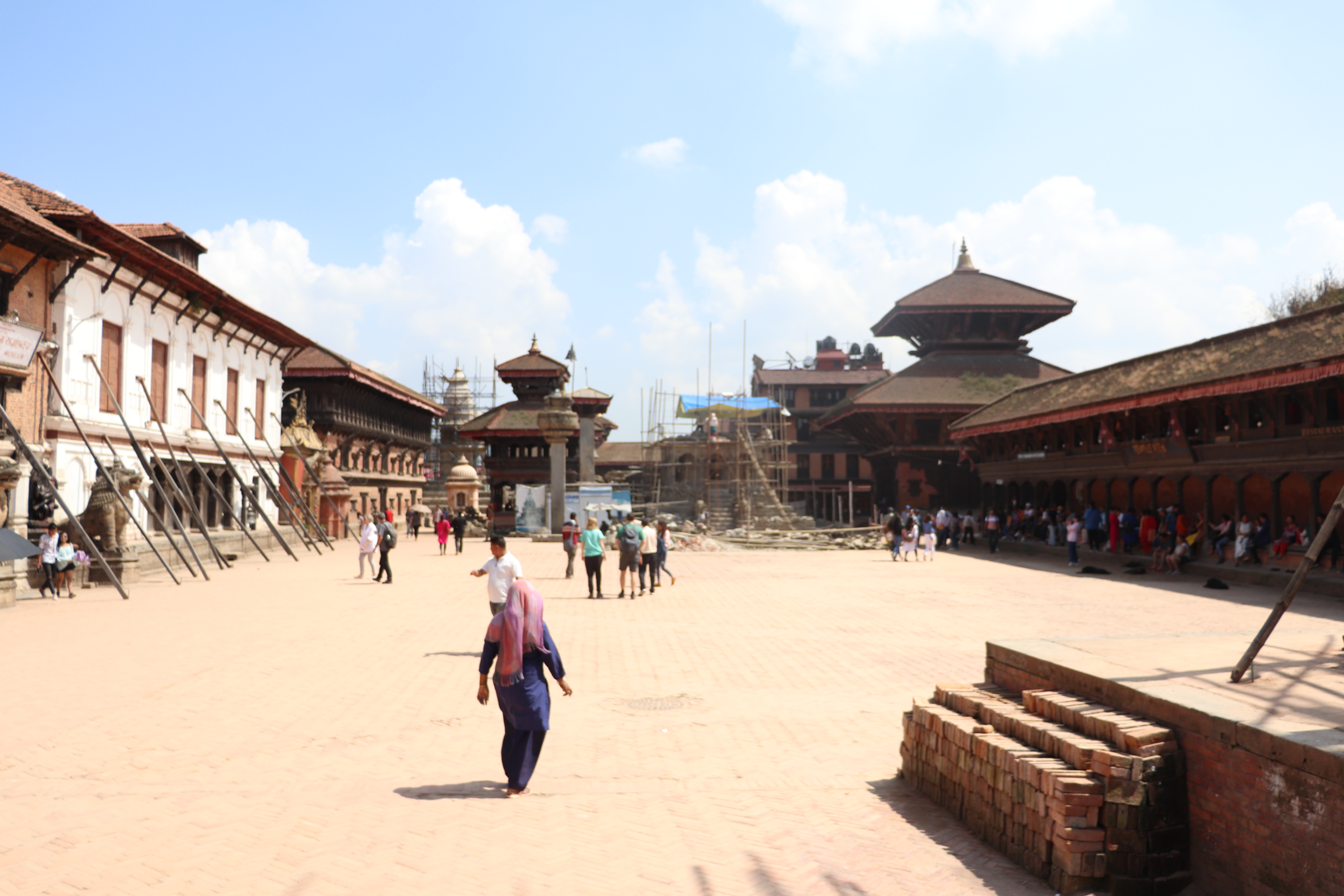
Day Day1:: Arrive in Kathmandu — Meet & assist our airport representative and transfer you to the hotel as booked. Overnight at Dwarika’s Hotel [-/-/-] Day Day2:: In Kathmandu — Visit Bhaktapur durbar square, Pashupatinath Temple and Boudhanath Stupa Bhaktapur: Perched on a hill at an altitude of 1,401 m, Bhaktapur or Bhadgaon, literally the ‘City of Devotees’ is a major tourist destination that takes visitors back in time. Bhaktapur lies 12 km east of Kathmandu city on the Arniko Highway that leads to the Chinese border. Bhaktapur is still untouched by rapid urbanization and has managed to retain its brick-paved roads, charming red brick houses, and a way of life that goes back to medieval times. This ancient city is also famous for pottery and woodcarving amply displayed on the squares and windows respectively. The magnificent temple of Pashupatinath with its astonishing architectural beauty is situated amidst a lush green natural setting on the bank of the sacred Bagmati River. The temple built in pagoda style has a gilded roof and richly carved silver doors. The temple stands as a symbol of faith, region, culture, and tradition. Dedicated to the Hindu God of Destruction, Lord Shiva, this temple is regarded as the most sacred temple of all Lord Shiva temples. The richly ornamented pagoda houses the sacred linga or phallic symbol of Lord Shiva. It is listed as a UNESCO World Heritage Site. Every year thousands of pilgrims from all over the world come to pay homage to this temple. Non-Hindu visitors are strictly prohibited to enter the temple however; they are permitted to view the temple from the east banks of the River Bagmati. Pashupatinath is also Nepal's most renowned Hindu cremation site. In the Hindu Culture, after a person is dead, his/her body is wrapped in cloth, placed on a bamboo litter, and brought to the cremation site where the eldest son in the family burns the body. The ashes from the dead body are collected and swept into the River Bagmati which eventually joins the Holy Ganges. Arya Ghat is of special importance because it is where the members of the royal family were cremated. The main cremation site is Bhasmeshvar Ghat, which is the most-used cremation site in the Kathmandu Valley. Boudhanath Stupa is one of the most imposing landmarks of Kathmandu and is a center of Tibetan Buddhism. The stupa is built on a massive three-level mandala-style platform and is 36 meters (118 feet) in height. The base of the stupa is adorned with 108 small images of the Dhyani Amitabha Buddha and is inset with prayer wheels. Thousands of pilgrims circle the stupa in a clockwise direction each day spinning the prayer wheels. It is said that each spin of a prayer wheel is the equivalent of reciting the mantra. The stupa’s massive mandala makes it one of the largest spherical stupas in Nepal. The ancient stupa is one of the largest in the world. It is a UNESCO World Heritage Site. The Stupa is on the ancient trade route from Tibet that enters the Kathmandu Valley by the village of Sankhu in the northeast corner. Tibetan merchants have rested and offered prayers here for many centuries. When refugees entered Nepal from Tibet in the 1950s, many decided to live around Boudhanath. The Stupa is said to entomb the remains of a Buddhist sage, perhaps parts of the Buddha’s body (bones, teeth), or sacred texts and other ceremonial objects. We can light the butter lamp and hang the prayer flag in the stupa. Overnight at Dwarika’s Hotel [B/-/-] Day Day3:: In Kathmandu — Visit Kopan Monastery, Kathmandu durbar square, Swyambhunath Stupa, and Patan durbar square. After an early breakfast, we will visit Kopan Monastery which is located in the outskirt of Kathmandu Valley with just about an hour's drive. Kathmandu, the largest city of Nepal, is the political as well as cultural capital of the country. Like any big city, Kathmandu has seen rapid expansion in the last decade, but despite the hustle and bustle so typical of metropolitan cities, its people remain as refreshingly friendly as ever. Retaining its ancient traditions, Kathmandu is blessed by a Living Goddess and is enriched by endless ceremonial processions and events that take to the streets now and then with throngs of devotees seeking blessings. These religious festivals are steeped in legend and are quite a spectacle with chariot processions and masked dancers often possessed by the spirits of deities. The Temple of the Living Goddess: The Kumari Devi is the most important of several living goddesses in Nepal. She is seen on the temple’s balcony regularly. Durbar Square: ‘Durbar’ means ‘palace’, and takes its name from the old Royal Palace. This is the center of the old city, and there are several interesting temples including Kasthamandap, the House of Wood, which gives the city its name. Kathmandu Valley comprises the three ancient cities of Kathmandu, Patan, and Bhaktapur, which were once independent states ruled by the Malla kings from the 12th to the 18th centuries. The three cities house seven UNESCO World Heritage shrines that are together listed as UNESCO World Heritage Sites (Culture). The valley is also home to hundreds of other exquisite monuments, sculptures, artistic temples, and magnificent art – reminders of the golden era in Nepal’s architecture. Swayambhunath Stupa also known as the Monkey Temple is a UNESCO WORLD Heritage Site. It rests on a hillock 3 km towards the western edge of Kathmandu and is one of the most important and sacred Buddhist shrines of Nepal. Legend has it that when Kathmandu Valley was a lake 2000 years ago, a single lotus flower grew at the center of the lake. When Saint Manjushree, the Bodhisatva drained the lake with a single slash of his sword, the lotus settled on top of a hill and magically turned into a stupa. Thus Swayambhunath is also known as a Self-Created stupa. This stupa is the most ancient and perhaps the most enigmatic of all holy shrines in Kathmandu. The area surrounding the stupa is filled with smaller chaityas, temples, painted images of deities, and numerous other religious objects. There are many small shrines with statues of Tantric and shamanistic deities, prayer wheels for the Tibetan Buddhists, Shiva lingams, and a popular Hindu temple dedicated to Harati, the Goddess of smallpox and other epidemics. Patan also known as Lalitpur, the city of artisans is a paradise of fine arts and one of the three cities in the Kathmandu Valley. Located 5 miles southeast of Kathmandu City, Patan is best known for its rich cultural heritage. It is home to the valley’s finest craftsmen who have preserved such ancient techniques as the repoussé and lost wax process used to produce exquisite sculptures. The city retains much of its old charm with its narrow streets, brick houses, and a multitude of well-preserved Hindu temples, Buddhist monasteries (vihar), and monuments. The predominant sound in Patan is that of the tinkering of craftsmen bent over the statuettes they are shaping. As in Kathmandu, Hinduism and Buddhism have co-existed here for ages, influencing each other, and the religious harmony is exemplary. The city of Patan offers visitors the chance to see an abundance of exquisite works of religious art and architecture. Patan is enclosed within four stupas, built in the 3rd century AD by Emperor Ashoka. Each stupa is symbolic of the Buddhist Wheel of Righteousness (‘Dharma Chakra’). In the heart of Patan, amidst the Patan marketplace lays the Patan Durbar Square, an area filled with ancient palaces, pagoda temples, stone baths, Hindu and Buddhist statues, engravings, and bronze cravings. The Palace of the Malla Kings is one of the highlights of Patan. The palace complex lays the stone temple of Lord Krishna, which was built in the 16th century A.D. The Royal Bath (known as 'Tushahity') is another showpiece of fine stone and bronze carving in the palace complex. Patan Durbar Square is one of seven monument zones in the Kathmandu Valley that together have been designated a UNESCO World Heritage Site. Also located in the square is the Patan Museum, formerly a Malla palace, which houses bronze statues and religious objects, some dating back to the 11th century. Overnight at Dwarika’s Hotel [B/-/-] Day Day4:: Fly to Lumbini [35 minutes flight] — Lumbini, the birthplace of Lord Buddha, in the Terai plains of Nepal, is one of the greatest pilgrimage sites for Buddhists. Prince Siddhartha Gautama who later became Buddha, the ‘Enlightened One’ was born in the Sacred Garden of Lumbini in 623 BC. More than 400,000 devout Buddhists and non-Buddhists visit Lumbini every year, some to admire the multitude of architecturally beautiful temples, stupas, and monasteries built by various international Buddhist communities and some arrive to pay homage at the Sacred Garden. Lumbini is also a UNESCO World Heritage Site (Culture) and holds immense archeological and religious importance. There are 62 archaeological sites scattered around Lumbini, all bearing significance to the life and enlightenment of the Buddha. A famous landmark is the Ashoka Pillar raised by the great Emperor who converted to Buddhism. Overnight at Hotel Kasai [B/L/D] Day Day5:: In Lumbini — Visit the monastic zones where different countries have built temples and monasteries depicting different sects of Buddhism. The Myanmar Temple (Lokamani Cula Pagoda) is a shiny gold and white structure that resembles the Shwedagon Pagoda of Yangon while the International Gautami Nuns Temple is a replica of the Swayambhu Stupa of Kathmandu. The China Temple, built by the Buddhist Association of China, is a complex of pagodas, prayer rooms, and meditation cells. Across the road is the Dae Sung Suk Ga SA Korean Temple. The Japan Peace Stupa, built by Nippon Jon Kyohoji of Japan, is a 41-m tall structure with four different Buddha statues set into the stupa’s dome facing the four cardinal directions. Some other beautiful monuments and temples have been built in Vietnam, Thailand, Mongolia, France, Germany, and Sri Lanka. Overnight at Hotel Kasai [B/L/D] Day Day6:: Drive to Pokhara [180 km/ around 6 hours] — Today we will drive to Pokhara and visit some sightseeing spots and transfer to Tiger Mountain Pokhara Lodge. Pokhara’s bewitching beauty has been the subject of many travel writers. Its pristine air, spectacular backdrop of snowy peaks, serene lakes, and surrounding greenery make it ‘the jewel in the Himalayas’, a place of remarkable natural beauty. With the magnificent Annapurna range forming the backdrop and the serenity of three major lakes – Phewa, Rupa, and Begnas – Pokhara is the ultimate destination for relaxation. Pokhara Valley is the end of the famous Annapurna Circuit and a gateway to some of the most famous long-distance treks in Nepal. It also offers plenty of rewarding short walks and day trips suitable for children and weary trekkers. It is the second largest city in Nepal and sits high on the list of ‘must-visit’ places in Nepal. Pokhara offers a variety of places to be explored such as the enchanting Phewa Taal or Phewa Lake, the second-largest lake in Nepal. The lake is stream-fed but a dam regulates the water reserve, therefore, it is classified as a semi-natural freshwater lake. The lake offers boating services to enjoy the beauty and serenity Pokhara has to offer. Wooden boats can be rented along the shoreline. The north shore of the lake has developed into a lakeside tourist hub with several souvenir stores, bookshops, hotels, restaurants, and bars catering to tourists. Barahi Temple – the island temple: The two-story pagoda of the Barahi Temple is situated on a small island in the Phewa Lake surrounded by marvelous views. This Hindu temple in Nepal is dedicated to Goddess Ajima in the form of a boar called Barahi to pierce her evil enemies with her pointed tusks. Barahi is pictured with the face of a boar with a cup in one hand and fish in the other. Overnight at Tiger Mountain Pokhara Lodge [B/L/D] Day Day7:: In Tiger Mountain Pokhara Lodge — For those keen on bird watching, a walk before breakfast with the lodge’s skilled local guides will offer the chance to see many birds as they forage for food. Bulbuls, Barbets, Babblers, and other species typical of the middle hills of Nepal are seen regularly around the lodge. After breakfast, we will head out on a day walk to explore the culture and flora of the hill villages around the lodge with an outdoor setting for lunch. Combining steady walking, rural villages, farmland, and forest, the walk will be a mini-trek and typical of a day’s walking in the Himalayas. Overnight at Tiger Mountain Pokhara Lodge [B/L/D] Day Day8:: Fly back to Kathmandu [25-minute flight] — Today you will be transferred to the airport for your flight back to Kathmandu. Overnight at Dwarika’s Hotel [B/-/-] Day day9:: Drive to Kodari/ Zhangmu — Today you will be transferred to Kodari which lies at the border point between Nepal and the Tibetan Region of the People’s Republic of China. The 144 km Arniko Highway from Kathmandu takes about 4 to 5 hours each way. It is a beautiful drive through the countryside, magnificent river gorges with stunning natural beauty. From Kodari we will continue our drive to Zhangmu. Zhangmu: Zhangmu also known as Khasa in Nepali and Dram in Tibetan is a remarkable town that hugs the rim of a seemingly never-ending succession of hairpin bends down to the customs area at the border of China and Nepal. Zhangmu is a typical border town, much largest than Nyalam, and has a restless, reckless feel to it. Overnight at Cai Yuan [B/-/-] Day Day10:: Drive to Nyalam — Today we drive to Nyalam which takes around 2 hours. Rest of the time free for acclimatization Nyalam: Nyalam is a one-street town around 30km before the Nepal border. It has been steadily growing in size and facilities have been improving over the last few yrs. The travelers coming from Kathmandu stay in Nyalam but most coming from Lhasa stay in Tingri. The closest cultural sight to Nyalam is Nyalam Pelgye Ling, a small temple that is associated with the Cave of Milarepa. The Buddhist's famous mystic, composure of sings had lived in the late 11th and early 12th centuries. Overnight at Nyalam Guest House [B/-/-] Day Day11:: Drive to Rongbuk, then visit Everest Base Camp — It's just over a two-hour walk each way from Rongbuk Monastery to the Everest Base Camp. Vehicles do the trip in about 15 minutes. Above Rongbuk, the valley expands into a large glacial outwash plain. There is a shortcut from behind the big Chorten at the Monastery, which cuts through a meadow and then past a superbly photogenic complex of ruins called Rong Chung. Until the communist takeover, this was a thriving meditation retreat. The road climbs up through a jumble of boulders and glacial debris favoring the left side of the valley. Passing the recently built Sherab Choling Hermitage (signposted as the Guru Rinpoche Monastery) you may see herds of deer and yak on the hillsides. From here it is only 30 minutes to Everest Base Camp After visiting Everest Base Camp we will drive back to Rongbuk Overnight at Rongbuk Guest House [B/-/-] Day Day12:: Drive to Shegar — After breakfast drive to Shegar. Visit Sakya Monastery Sakya Monastery: On the way from Shigatse to Shegar in the city of Sakya is the Shakya Monastery, built in 1073. Sakya means ‘Grey Soil’ in Tibetan, a name given because of the gray soil in the surrounding area. The monastery is divided into Southern and Northern parts. The Northern Monastery is now visible as ruins. There are a lot of historical articles in the monastery, among them are found a lot of the imperial certificates, gold signets, crowns, and costumes bestowed by the Yuan Dynasty emperors. It has over 10,000 volumes of Tibetan books on astronomy, medicine, calligraphy, and history. So the Sakya monastery enjoys the title ‘the second Dun Huang Cave.’ Overnight at Hotel Bebar [B/-/-] Day Day13:: Drive to Shigatse — After breakfast drive to Shigatse. Visit Tashilhunpo Monastery Tashilhunpo Monastery is a historic and culturally important monastery in Tibet. It is located on a hill in the center of Shigatse, the second-largest city in Tibet. Tashilhunpo in Tibet means "all fortune and happiness gathered here" or "heap of glory". Founded by the First Dalai Lama in 1447, the monastery is the traditional seat of successive Panchen Lamas, the second highest-ranking tulku lineage in the Gelukpa tradition. Tashilhunpo in its prime had over 4,000 monks, but after the Tibetan national uprising that took place in 1959, a handful of Tashi Lhunpo Monastery monks along with many thousands of Tibetans escaped into India. Since the early 1980s parts of the Tashilhunpo monastery have been open to the public and it is an important tourist attraction in Tibet today. Overnight at Tashi Choe Ta [B/-/-] Day Day14:: Drive to Gyantse — After breakfast drive to Gyantse. Visit Phalkor Monastery and Kumbum Stupa. Phalkor Monastery: Located about 100 km east of Shigatse, the unique Palkhor Monastery, also named Palcho Monastery, is very different from other monasteries. It is reputed as the lord of Tibetan stupas and is famous for its architecture, sculpture, and mural painting art. Palkhor Monastery enjoys a high status in Tibetan Buddhism history because it houses three sects, Sakyapa, Kadampa, and Gelugpa together. It was built in collaboration with the Newari architects and Tibetan artists. Kumbum Stupa: The spectacular Bodhi stupa, or Kumbum in Tibetan was built in 1412 and completed 10 years later. Deemed as the symbol of the monastery, the spectacular "stupa" consists of hundreds of chapels in layers, housing about a hundred thousand images of various icons. The elegant structure is worth visiting. The famous Kumbum pagoda, built in collaboration with Newari artists from Nepal and Tibetan artists, also stands in the same courtyard with nine stories, 108 doors, and 77 chapels containing clay sculptures and various murals. The Stupa rises over four symmetrical floors and is surmounted by a gold dome. The dome rises like a crown over four sets of eyes that gaze serenely out in the cardinal directions of the compass. Kumbum means 10,000 images. The pagoda is said to have 100,000 images, either sculptured or painted, this is the reason for its name "100,000 Image Pagoda". Overnight at Gyantse Hotel [B/-/-] Day Day15:: Drive to Lhasa — Today we will drive to Lhasa. Upon reaching Lhasa transfer to the hotel as booked Lhasa, which means ‘the land of the gods’ is the heart and soul of Tibet. It is a city of wonders, the capital of the Tibet autonomous region of China. The city contains many culturally significant Tibetan Buddhist religious sites and lies in a valley next to the Lhasa River. For centuries this holy city has attracted travelers from all over the world, drawn by its beautiful scenery, cultural heritage, and mysticism leaves the travelers captivated. Overnight at St. Regis [B/-/-] Day Day16:: In Lhasa — Visit Potala Palace, Norbulinka, Jokhang, and Barkhor Market Potala Palace, the chief residence of the Dalai Lama since the 7th century has been the focus of travelers for centuries. It is the cardinal landmark and a structure of massive proportion. It symbolizes Tibetan Buddhism and its role in the traditional administration of Tibet. It is an architectural gem that was built in the colossal monastic style of Central Tibet in the 7th century but rebuilt in the mid-17th century. The Tibetans themselves rarely speak of the sacred place as the "Potala", but rather as "Peak Potala" (Tse Potala), or usually as "The Peak." It stands 300m above the valley floor, atop the hill called Marpo Ri, the ‘Red Hill’. The Potala Palace is an immense structure with an interior space of about 130,000 square meters, it has thirteen stories of buildings containing 1000 rooms, 1000 shrines, and about 200,000 statues that date from 1645 when the fifth Dalai Lama began erecting a palace that would serve as a sacred and administrative center. It served all the succeeding Dalai Lamas until the 14th Dalai Lama who fled to Dharamshala, India during the 1959 Tibetan Uprising. Today, the Potala Palace has been converted into a museum by the Chinese authorities. The Potala Palace is one of Tibet’s most impressive and enduring monuments that was protected by the Chinese Army of Red Guards during the Cultural Revolution. As a result, many of its chapels and treasures are intact, virtually unchanged since the 17th century. It was listed as a UNESCO World Heritage Site in 1994. Norbulingka: Built 100 years after the Potala palace, Norbulingka means ‘Treasure Park’ in Tibetan and is situated in the western suburb of Lhasa City, on the bank of the Kyichu River, about one-kilometer southwest of the Potala Palace. It is the biggest man-made garden in Tibet. The park was built by the Seventh Dalai Lama in 1755 and became the summer residence of the Eighth Dalai Lama. The garden contains an abundance of chapels, gardens, fountains, and pools as well as a variety of beautiful flowers and trees. Norbulingka reflects both the ethnic and religious traits of the Tibetan people and embodies the architectural style of inland China. It is of great cultural value and was listed by UNESCO as a World Cultural Heritage Site in 2001 as an extension of the Potala Palace. During the Cultural Revolution, the Norbulingka complex suffered extensive damage. However, in 2001, the Central Committee of the Chinese Government in its 4th Tibet Session resolved to restore the complex to its original glory. The garden is a favorite picnic spot and provides a beautiful venue for theatre, dancing, and festivals, particularly the Sho Dun or 'Yoghurt Festival', at the beginning of August, with families camping in the grounds for days surrounded by colorful makeshift windbreaks of rugs and scarves and enjoying the height of summer weather. There is also a zoo at Norbulingka, originally to keep the animals that were given to the Dalai Lama. Heinrich Harrer helped the 14th Dalai Lama build a small movie theatre there in the 1950s. Jokhang meaning ‘House of the Lord’ in Tibetan is located at the center of the old Lhasa and is the oldest and the most revered religious structure in Tibet. Built-in 647 by Songtsen Gampo, it has a history of more than 1,300 years. It was built by craftsmen from Tibet, China, and Nepal and thus features an intriguing mix of architectural styles. Jokhang Temple also houses many invaluable cultural relics. Every year, the Great Prayer Festival is held here. The rites of Dalai Lamas and Panchen Lamas' initiation into mamahood are also held in the monastery. Princess Wencheng made use of Chinese astrology to decide that the temple should be built over the pool where the temple is now located. She believed that the pool was a witch's heart and that building the temple over it would purify the area of evil. This pool still exists under the temple. Outside the temple, an old and withered willow tree has survived centuries and is said to be planted by Princess Wencheng herself. Barkhor Market: Barkhor Street is the oldest street in Lhasa and runs through the center of the old city. It is a circular street where Tibetan culture, economy, religion, and arts assemble. The word Barkhor refers to the middle of the three concentric holy circuits around the Jokhang. The Barkhor Circuit runs through the heart of the old city where life has changed little down the centuries and it gives you a curious sensation of having slipped through time into a medieval carnival. Tibetans walk clockwise around the Jokhang Temple to pay their respects to Sakyamuni, establishing Barkhor Street as Tibet's "Sacred Way". Each day hundreds of Buddhist pilgrims flow in from every corner of Tibet and across China to make the trek through Barkhor Street. Some merely walk, but some progress by body lengths along the street clockwise every day into deep night to worship Sakyamuni. Barkhor will allow you to experience firsthand the religious fervor of Tibet. Overnight at St. Regis [B/-/-] Day Day17:: In Lhasa — Overnight at St. Regis [B/-/-]Visit Drepung monastery & Sera monastery Drepung Monastery: About 8km to the west of central Lhasa, Drepung is one of the "great three" Gelukpa University monasteries of Tibet. The other two are Ganden and Sera. Seen from afar, Drepung’s grand, white construction gives the monastery the appearance of a heap of rice hence; Drepung means ‘heaps of rice’. The fertility of its fields supported a monastic community that before 1959, ranked as Tibet’s largest monastery with 7,770 monks. Since the 1950s, Drepung Monastery, along with its peers Ganden and Sera have lost much of their independence and spiritual credibility in the eyes of Tibetans since they operate under the close watch of the Chinese security services. For over 500 years Drepung served as the major pillar of the theocratic state, serving as the main political headquarters for the Gelugpa sect of Tibetan Buddhism. It also served as the residence of the Dalai Lamas until the Potala Palace was constructed in 1645. Suffering only minor damage during the Cultural Revolution Drepung has plenty of historical relics, Buddhist scriptures, and arts. The Drepung Monastery houses many cultural relics, making it more beautiful and giving it more historical significance. Statues of celebrities in Buddhism are found on the first story of the Coqen Hall, rare sutras on the second story, and a famous conch shell on the third one. All of these add to the mystique of the monastery. Sera Monastery: 5km North of Lhasa, the Sera Monastery’s setting is one of the prettiest in Lhasa, hugging the ridge that forms the Northern wall of the Kyi Chu Valley. Founded in 1419, Sera Monastery is one of the "great three" Gelukpa university monasteries in Tibet. The other two are Ganden Monastery and Drepung Monastery. The origin of the name 'Sera' is not certain, but it may have come from the wild roses (se ra in Tibetan) surrounding the original site. In its heyday, Sera hosted a huge monastic population and five colleges. Like Drepung, the colleges in Sera specialized in: Sera Me in fundamental precepts of Buddhism, Sera Je in the instruction of itinerant monks, and Sera Ngagpa in Tantric studies. The monastery is magnificent, featuring a unique style quite different from other famous monasteries in Lhasa and covering an area of 114,946 square meters (28 acres). Its main buildings are Coqen Hall, Zhacang (college), and Kamcun (dormitory). Buddhist Scriptures written in gold powder, fine statues, scent cloths, and unparalleled murals can be found in these halls. The monastery is a Buddhist think-tank and lively debates on Buddhist doctrines are held here. Day Day18: Final departure to Beijing [B] — Today you will be transferred to the airport for your flight to Beijing.
What's included in your experience
Included
- The above cost includes:
- Nepal Portion:
- All necessary arrival/ departure transfers.
- Meet assistance at the airport.
- 04 nights’ hotel accommodation at Dwarika’s hotel [Heritage room] - Kathmandu on twin sharing basis on a bed and breakfast plan.
- 02 nights’ accommodation at Hotel Kasai – Lumbini on twin sharing basis on a full board plan.
- 02 nights’ accommodation at Tiger Mountain Pokhara Lodge- Pokhara on twin sharing basis and on a full board plan.
- All sightseeing and transfers as per the above program with private vehicles escorted by English-speaking local guides.
- All monument entrance fees.
- Tibet Portion:
- All necessary arrival/departure transfers.
- Meet assistance at the airport.
- 03 Nights hotel accommodation St. Regis [Potala view] – Lhasa in twin sharing basis on bed and breakfast plan.
- 01 Night accommodation at Tashi Choe ta- Shigatse on twin sharing basis on the bed and breakfast plan
- 01 Night accommodation at Gyantse Hotel- Gyantse on twin sharing basis on a bed and breakfast plan.
- 01 Night accommodation at Hotel Bebar- Shegar on twin sharing basis on a bed and breakfast plan
- 01 Night accommodation at Rongbuk Guest House- Rongbuk on twin sharing basis on a bed and breakfast plan
- 01 Night accommodation at Nyalam Guest House- Nyalam on twin sharing basis on a bed and breakfast plan
- 01 Night accommodation at Hotel Cai Yuan- Zhangmu on twin sharing basis on a bed and breakfast plan
- Sightseeing tours and all surface transfers in Tibet will be provided as per the itinerary with English speaking Tibetan guide by private vehicle.
- Tibet Travel Permit.
- All entrance and monument fees as indicated in the program.
Not included
- The above cost does not include:
- Nepal entry visa fee
- Chinese Visa Fee – [As quoted separately and subject to change if revised].
- International & domestic airfare [As quoted separately and subject to change if revised].
- Meals that are not mentioned in the above program
- Refreshments, bottled drinks.
- Tipping.
- Insurance and rescue of any form.
- Cost arising out of flight cancellations/road blockades/landslides/riots and events beyond our control.
- Expenses of personal nature and any other expenses not mentioned in the above cost.
- Photography charges in the monasteries and monuments.
- Any other services and items which are not mentioned in the above cost inclusion.
Essential trip information
Before you go
Note: All information in this itinerary is accurate to the best of our knowledge but please note that changes to our trips can and do occur. This may be due to our effort to improve our program or logistical reasons such as changes in flight schedules, traffic conditions, weather conditions, or government policies. Dharma Adventures will make every effort to keep you informed of any changes but cannot be held liable for any alterations made to the published itinerary. The Nett land cost in US$ per person on twin sharing basis: 02 Pax: US$ 5470.00 per person Airfare Extra [Subject to change if revised] -Kathmandu- Bhairawaha: USD 129.00 per person -Pokhara- Kathmandu: USD 106.00 per person -Lhasa – Beijing: Business class: USD 1185.00 per person Economy class: USD 467.00 per person Extra Cost [Subject to change, if revised]: Tibet Visa Fees: US$ 200.00 per person for US Nationals US$ 115.00 per person for other Nationals
Fitness & eligibility
3
Meeting point
Kathmandu
There's more to experience.
Discover another journey, explore local experiences or find a place to stay.