Lumba Sumba Pass Trekking
A journey shaped by the landscapes, people and experiences of Nepal.
Offered by Nepal Alternative Treks & Expeditions Pvt. Ltd.
 NEPAL · TRAVEL EXPERIENCES
Discover the journey
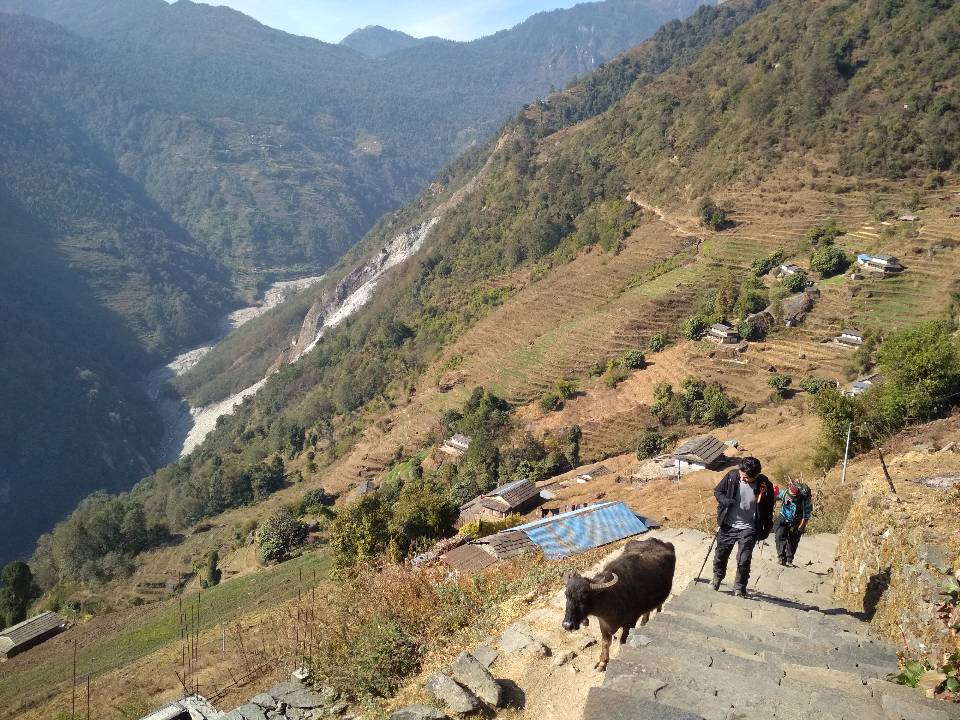
Lumba Sumba Pass Trekking Lumba Sumba Pass Trekking is one of the new trekking routes explored by Trekking Agencies’ Association of Nepal (TAAN) in 2012. Lumba Sumba pass (5200m) is the major attraction of this route. Offering some of the most spectacular Himalayan landscapes, this trekking route is home to different ethnic groups like the Limbus, Sherpas, Rai, Gurung, Magars, Newars and Tamangs. The trek runs through Kanchenjunga Conservation Area (KCA) in the eastern Himalaya. Trekkers can explore the traditional farming practices and see different birds and wildlife species, including the endangered snow leopard and red panda, from the route. There are a number of high mountain lakes in Olangchung Gola. Through this route, we explore two of Nepal’s best-preserved protected areas – the Kanchanjunga Conservation Area and the Makalu Barun National Park. Through the route, one can also trek to the base camps of Mt Kanchanjunga and Mt Makalu. The Tamor and Arun Rivers are the major tributaries of the mighty Sapta Koshi River. The route encompasses alpine grasslands, rocky outcrops, dense temperate and sub-tropical forests, and low river valleys. Apart from natural beauty, trekkers can also explore cultural heritage like monasteries, chhortens, temples and prayer walls. And to add to the flavor, the festivals of all of these people living in harmony only serve to make the native culture livelier. This is unexplored, high altitude trekking and thus for the experienced. The terrain is harsh and trails are not always in good condition. The remoteness, spectacular landscapes and amazing views of the Himalayas make this trek however an amazing and unforgettable experience. The trek begins in Phoomling, where we arrive after a 7-hour drive from Bhadrapur. We start trekking from Phoomling and pass through diverse ethnic groups, cultivated land, and animal farms along the Lumba Sumba pass trek. Nepal alternative trek has been operating Lumsumba pass trekking since it has opened in 2012. We have got high recommendations and positive feedback from them regarding this trip.
The memorable moments
Hike towards the Nepal's most newly discover remote and beautiful trekking trail. Panoramic views of the Kanchenjunga, Makalu and Kumbhakarna peaks. Encounter the remote places of Nepal and the local livelihood. Occasional sightings of the Snow Leopard and Red Panda.
Journey at a glance
Day 1: Kathmandu-Bhadrapur ( Taplejung) by flight- Fungling ( 600m./1980ft.) 4 hrs. drive — We take a flight in the morning to Bhadrapur (Taplejung) then drive to Fungling and stay overnight there at hotel. Meals included : Breakfast, Lunch, Dinner Day 2: Fungling - Mitlung (909m./2999ft.) 5 hrs. walk — The first day trek starts from Fungling (1777m) – the headquarters of Taplejung district. Sherpa Tol is the gateway to this trek. The trek passes through beautiful cardamom fields and Alnus trees (Uttis) until Hangdewa VDC which takes around two and half hours. On the way, there are small tea shops at Asangpati Tole, Gaigode Tole and Panisar Tole that can be used for alternative accommodation as they provide home stay facilities. From Panisar, the trek is downhill until the suspension bridge that acts as a border between Hangdewa VDC and Furumbu VDC. A walk of 10 minutes takes us to Pawa Village (1546m) for lunch. After lunch, the trek progresses along the banks of Tamor River to Mitlung – a walk of around two hours. Mitlung (909m) is our destination for the day as it has good camping sites with facilities like kitchen and dining hall. Meals included : Breakfast, Lunch, Dinner Day 3: Mitlung -Chiruwa ( 1246m./4111ft.) 5 hrs. walk — The trek passes along the banks of Tamor River on the second day. It is a pleasing walk until Furumbu – a 40 minute walk from Mitlung. From Furumbu, the trail is uphill for half hour then descends through Ulnus and Schima wallachiana mixed forest to Siwa Bazar (950m) at Linkhim VDC. We can reach Siwa Bazaar in three hours from Mitlung. Siwa Bazar is a good place for lunch. It is a small market with facilities like drug store, groceries and a police station. After lunch, the trek runs along the Tamor River until Tawa Village. Tawa Village (1146m) has a small tea shop. The trek runs uphill from here until we reach the KCAP Entrance Gate (1300m) at Thiwa Village. From here, the trek gradually descends until Chiruwa – our destination for the day. Chiruwa is a small market with couple of lodges and good camping sites. It is a popular stopover for tourists and locals alike. Meals included : Breakfast, Lunch, Dinner Day 4: Chiruwa - Lelep ( 1687m./5567ft.) 5 hrs. walk — This day also the trek runs along the mighty Tamor River. At the start of the trek, there are two big stones with religious significance. The trek passes through Ulnus trees passes until we reach a big landslide that takes around half an hour to cross. After a walk of two and half hours from Chiruwa through beautiful cardamom gardens, we reach Tapethok (1340m) for lunch. It is a small market with some tea shops. There is also a KCAP checkpoint at Tapethok. After lunch, it is a pleasing walk for about an hour until Pembu (1486m). From Pembu, it is an uphill climb for about two and half hours to Lelep – our destination for the day. The KCAP headquarters is in Lelep. Similarly, there is a police station, some tea shops, groceries and hotels. There are also some good camping sites in Lelep. Meals included : Breakfast, Lunch, Dinner Day 5: Lelep - Ela Danda ( 2051m./6768ft.) 5 hrs. walk — After breakfast, the trek runs along the bank of Tamor River through dense forest that offers good habitat for different wildlife species. You can see some wild species if you are lucky. We crossed a suspension bridge after a walk of about an hour from Lelep. After crossing suspension bridge, it is an uphill climb through pine forest for about half an hour until we reach a monastery. From there, the trek gradually descends after about half an hour and we reach Gowatar (1800m) for lunch. Gowatar is a small settlement with a few houses. Near the village, there is a big stone and it is believed that only the religious people can move them. After a walk of around half hour from Gowatar, we reach a place that offers spectacular views of two waterfalls about 100 meters tall. A walk of about half an hour form here takes us to Phedi. After crossing Tamor River, it is an uphill climb for about 40 minutes until we reach a resting place known as chautaro in local dialect. Another 20 minutes walk will take us to our camping site at Ela Danda. The place offers panoramic view of snowcapped peaks including the Small Kasturi Peak and Tamor River. Meals included : Breakfast, Lunch, Dinner Day 6: Ela Danda- Selep Kharka ( 2525m./8332ft.) 6 hrs. walk — The walk on the fifth day is pleasing as it passes through Ulnus and Rhododendron forest for about an hour until we reach a suspension bridge. After crossing the suspension bridge, the trek passes through dense bamboo groves (spread over around 5 hectares). This place is popular among trekkers as the habitat of red panda. If you are lucky, we might catch a sight of red panda from the trail itself. After a total walk of three and half hours from El Danda, we reach Maguwa (2435m) for lunch. After lunch, the trail passes through maple and Ulnus forest. There is a big landslide on the way and trekkers must be careful while crossing it. After a walk of about one and half hour, we reach Selep Kharka – our destination for the day. Meals included: Breakfast, Lunch, Dinner Day 7: Selep Kharka- Olangchung Gola ( 3208m./10586ft.) 5 hrs. walk — The sixth day’s trek runs along the banks of Tamor River leading to a place called Jongim (2641), a flat land surrounded by snow capped hills, after a walk of about an hour. Another 40 minutes walk through rhododendron forest from Jongim, takes us to a suspension bridge. After an uphill walk of about an hour from the suspension bridge, we reach Ramite (2685m) for lunch. At Ramite, we can see mixed forest of Deodar and rhododendron. We see a beautiful waterfall after a walk of about an hour from Ramite. If you are lucky, you might be rewarded with the view of red panda from here. We caught the first glimpse of Olangchung Gola after a walk of around 45 minutes from the waterfall. After a climb of about 40 minutes, we finally reach the camping site at Olangchung Gola (3208m). Olangchung Gola is a beautiful Sherpa village with around 45 houses, a 465 years old monastery with golden manuscript and KCAP office. There is also a sub-health post, a primary school and a border police station at Olangchung Gola. Meals included : Breakfast, Lunch, Dinner Day 8: Olangchung Gola-Upper Langmale ( 3893m./12846ft.) 5 hrs. walk — The trek in the next three days will pass through complete wilderness. As the trek is in complete wilderness, it is better to hire a local Sherpa to avoid getting lost. However, piles of stones along the way act as sign posts, showing us our direction. The trek passes through pine and rhododendron forests. After a walk of two and half hours, we reach a place called Jadak (3636m) for lunch. A walk of three hours on snowy track will take us to our camping site at Upper Langmale. Meals included : Breakfast, Lunch, Dinner Day 9: Upper Langmale - Pass Camp (4747m./15665ft.) 6 hrs. walk — The eighth day trek can be interesting as snow leopards have been sighted numerous times from this trek. The trek runs along the Tamor River and on the other side of the river lies dense rhododendron forest. After a walk of about three hours, we reach Tangchetar (4203m) for lunch. Another three hours walk after lunch will lead us to our camping site at Pass Camp. Meals included: Breakfast, Lunch, Dinner Day 10: Pass Camp - Chaurikharka ( 4594m./15160ft.) 4 hrs. walk — This would be the most difficult yet most memorable day of this trek. This day the trek will pass through the Lumba Sumba Peak (5200m). It is better to start early as it will be difficult to cross the peak after noon. The trek climbs a bit up and again runs down. It is better to take packed lunch, as there are no good camping sites around. After a walk of about four and half hour from Pass Camp, we climb the Lumba Sumba Peak and descend down to Chaurikharka for night’s stay. Meals included : Breakfast, Lunch, Dinner Day 11: Chaurikharka-Thaudam ( 3500m./11550ft.) 5 hrs. walk — The trek is downhill from Chaurikharka as we come back to civilization after tiring walk for three days. After a walk of about three and half hours, we came across two roads – one to Lyasha in Tibet and the other toward Thudam. We prepared our lunch at this place. A walk of about three hours takes us to Thudam for the night’s accommodation. Thudam is a small village with around 30 houses of Sherpa people. Meals included: Breakfast, Lunch, Dinner Day 12: Thudam - Kharka ( 2877m./9494ft.) 5 hrs. walk — The eleventh day trek runs along the banks of Chujung Khola. The trail offers panoramic view of peaks in the Makalu range. On the way you see lot of small bushes and bamboo groves – the best habitat for red panda. If you are lucky, you can see this endangered species. It is better to carry packed lunch, as it is difficult to find drinking water along the trail. After a walk of about six-hours from Thudam, we reach Kharka for the night’s halt. Meals included : Breakfast, Lunch, Dinner Day 13: Kharka - Chyamthang ( 2229m./7355ft.) 5 hrs. walk — The twelfth day’s walk passes through dense rhododendron forest. As there are no villages on the way and also there are numerous side trails, it is better to hire a local guide to avoid getting lost. After a walk of about three hours form Kharka, we reach a place called Chaurikharka for lunch. From Chaurikharka, we can clearly see Chyamtang (2229m), Arun River, Ridha Village and the road that leads to Kimathanka. After lunch, the trek is all downhill for about three hours until we reach Arun River. After crossing the suspension bridge over the Arun, the trek is uphill for about an hour until Chyamthang – our destination for the day. Chyamthang is a small yet beautiful village with stone houses. Sherpas are the dominant population in the village. Meals included : Breakfast, Lunch, Dinner Day 14: Chyamthang- Hatiya ( 1595m./5263ft.) 6 hrs. walk — The trail on the day passes through rhododendron forest. The walk is easy as chirping of birds make you feel refreshed. The trail is one of the popular places for birding as we are entering Arun Valley that is home to several bird species. A walk of about two and half hours from Chyamthang takes us to Gimber Village (1585m) for lunch. Gimber Village offers spectacular view of snowcapped peaks in the Makalu range. From Gimber, the walk is easy and after a trek of about three hours we reach Hatiya for the night’s stay. Hatiya – a small village of Bhote people – is the entry point to the Makalu National Park. Meals included : Breakfast, Lunch, Dinner Day 15: Hatiya - Gola (1128m./3722ft.) 5 hrs. walk — The trek on the 14th day runs along the banks of Arun River. After a walk of about two and half hours from Hatiya, we reach the confluence of Arun and Barun rivers. After having lunch near the river confluence, the trek progress toward Gola – our destination for the day. A walk of around two and half hours after lunch takes us to our camping site at Gola. Gola is a very small village with only 12 houses. Sherpa, Rai and Tamang people reside here. Meals included : Breakfast, Lunch, Dinner Day 16: Gola -Gadhi ( 1179m./3890ft.) 5 hrs. walk — The trek passes through paddy fields on the 15th day – a sign that we are at lowlands now. The walk is pleasing as the trail makes a short descent, but again makes a short climb. After a walk of about two and half hours from Gola, we reach Pathibhara (not to be confused with the Pathibhara temple in Taplejung district) for lunch. Pathibhara (1524m) is a small Gurung village with tea shops, groceries and some hotels. The trail after lunch passes through agricultural land and we can find plenty of water sources and small settlements along the way. We reach Gadhi (1179m) – our destination for the day – after a walk of around three hours from Pathibhara. Gadhi (that means fort in Nepali language) is a place of great historical significance as Nepali Army fought bravely with invading Tibetan Army at this place and chased them away. Gadhi is a small village market with a health post, a school and a police station. Meals included : Breakfast, Lunch, Dinner Day 17: Gadhi - Tumlingtar overland and Kathmandu by flight — This is the last day of our trek. Drive to Tumlingtar airstrip and fly directly to Kathmandu. Meals included: Breakfast, Lunch Trek Ends
Day-by-day itinerary
Day 1Kathmandu-Bhadrapur ( Taplejung) by flight- Fungling ( 600m./1980ft.) 4 hrs. drive — We take a flight in the morning to Bhadrapur (Taplejung) then drive to Fungling and stay overnight there at hotel.
Confirm daily arrangements with the provider.
Day 2Fungling - Mitlung (909m./2999ft.) 5 hrs. walk — The first day trek starts from Fungling (1777m) – the headquarters of Taplejung district. Sherpa Tol is the gateway to this trek. The trek passes through beautiful cardamom fields and Alnus trees (Uttis) until Hangdewa VDC which takes around two and half hours. On the way, there are small tea shops at Asangpati Tole, Gaigode Tole and Panisar Tole that can be used for alternative accommodation as they provide home stay facilities. From Panisar, the trek is downhill until the suspension bridge that acts as a border between Hangdewa VDC and Furumbu VDC. A walk of 10 minutes takes us to Pawa Village (1546m) for lunch. After lunch, the trek progresses along the banks of Tamor River to Mitlung – a walk of around two hours. Mitlung (909m) is our destination for the day as it has good camping sites with facilities like kitchen and dining hall.
Confirm daily arrangements with the provider.
Day 3Mitlung -Chiruwa ( 1246m./4111ft.) 5 hrs. walk — The trek passes along the banks of Tamor River on the second day. It is a pleasing walk until Furumbu – a 40 minute walk from Mitlung. From Furumbu, the trail is uphill for half hour then descends through Ulnus and Schima wallachiana mixed forest to Siwa Bazar (950m) at Linkhim VDC. We can reach Siwa Bazaar in three hours from Mitlung. Siwa Bazar is a good place for lunch. It is a small market with facilities like drug store, groceries and a police station. After lunch, the trek runs along the Tamor River until Tawa Village. Tawa Village (1146m) has a small tea shop. The trek runs uphill from here until we reach the KCAP Entrance Gate (1300m) at Thiwa Village. From here, the trek gradually descends until Chiruwa – our destination for the day. Chiruwa is a small market with couple of lodges and good camping sites. It is a popular stopover for tourists and locals alike.
Confirm daily arrangements with the provider.
Day 4Chiruwa - Lelep ( 1687m./5567ft.) 5 hrs. walk — This day also the trek runs along the mighty Tamor River. At the start of the trek, there are two big stones with religious significance. The trek passes through Ulnus trees passes until we reach a big landslide that takes around half an hour to cross. After a walk of two and half hours from Chiruwa through beautiful cardamom gardens, we reach Tapethok (1340m) for lunch. It is a small market with some tea shops. There is also a KCAP checkpoint at Tapethok. After lunch, it is a pleasing walk for about an hour until Pembu (1486m). From Pembu, it is an uphill climb for about two and half hours to Lelep – our destination for the day. The KCAP headquarters is in Lelep. Similarly, there is a police station, some tea shops, groceries and hotels. There are also some good camping sites in Lelep.
Confirm daily arrangements with the provider.
Day 5Lelep - Ela Danda ( 2051m./6768ft.) 5 hrs. walk — After breakfast, the trek runs along the bank of Tamor River through dense forest that offers good habitat for different wildlife species. You can see some wild species if you are lucky. We crossed a suspension bridge after a walk of about an hour from Lelep. After crossing suspension bridge, it is an uphill climb through pine forest for about half an hour until we reach a monastery. From there, the trek gradually descends after about half an hour and we reach Gowatar (1800m) for lunch. Gowatar is a small settlement with a few houses. Near the village, there is a big stone and it is believed that only the religious people can move them. After a walk of around half hour from Gowatar, we reach a place that offers spectacular views of two waterfalls about 100 meters tall. A walk of about half an hour form here takes us to Phedi. After crossing Tamor River, it is an uphill climb for about 40 minutes until we reach a resting place known as chautaro in local dialect. Another 20 minutes walk will take us to our camping site at Ela Danda. The place offers panoramic view of snowcapped peaks including the Small Kasturi Peak and Tamor River.
Confirm daily arrangements with the provider.
Day 6Ela Danda- Selep Kharka ( 2525m./8332ft.) 6 hrs. walk — The walk on the fifth day is pleasing as it passes through Ulnus and Rhododendron forest for about an hour until we reach a suspension bridge. After crossing the suspension bridge, the trek passes through dense bamboo groves (spread over around 5 hectares). This place is popular among trekkers as the habitat of red panda. If you are lucky, we might catch a sight of red panda from the trail itself. After a total walk of three and half hours from El Danda, we reach Maguwa (2435m) for lunch. After lunch, the trail passes through maple and Ulnus forest. There is a big landslide on the way and trekkers must be careful while crossing it. After a walk of about one and half hour, we reach Selep Kharka – our destination for the day.
Confirm daily arrangements with the provider.
Day 7Selep Kharka- Olangchung Gola ( 3208m./10586ft.) 5 hrs. walk — The sixth day’s trek runs along the banks of Tamor River leading to a place called Jongim (2641), a flat land surrounded by snow capped hills, after a walk of about an hour. Another 40 minutes walk through rhododendron forest from Jongim, takes us to a suspension bridge. After an uphill walk of about an hour from the suspension bridge, we reach Ramite (2685m) for lunch. At Ramite, we can see mixed forest of Deodar and rhododendron. We see a beautiful waterfall after a walk of about an hour from Ramite. If you are lucky, you might be rewarded with the view of red panda from here. We caught the first glimpse of Olangchung Gola after a walk of around 45 minutes from the waterfall. After a climb of about 40 minutes, we finally reach the camping site at Olangchung Gola (3208m). Olangchung Gola is a beautiful Sherpa village with around 45 houses, a 465 years old monastery with golden manuscript and KCAP office. There is also a sub-health post, a primary school and a border police station at Olangchung Gola.
Confirm daily arrangements with the provider.
Day 8Olangchung Gola-Upper Langmale ( 3893m./12846ft.) 5 hrs. walk — The trek in the next three days will pass through complete wilderness. As the trek is in complete wilderness, it is better to hire a local Sherpa to avoid getting lost. However, piles of stones along the way act as sign posts, showing us our direction. The trek passes through pine and rhododendron forests. After a walk of two and half hours, we reach a place called Jadak (3636m) for lunch. A walk of three hours on snowy track will take us to our camping site at Upper Langmale.
Confirm daily arrangements with the provider.
Day 9Upper Langmale - Pass Camp (4747m./15665ft.) 6 hrs. walk — The eighth day trek can be interesting as snow leopards have been sighted numerous times from this trek. The trek runs along the Tamor River and on the other side of the river lies dense rhododendron forest. After a walk of about three hours, we reach Tangchetar (4203m) for lunch. Another three hours walk after lunch will lead us to our camping site at Pass Camp.
Confirm daily arrangements with the provider.
Day 10Pass Camp - Chaurikharka ( 4594m./15160ft.) 4 hrs. walk — This would be the most difficult yet most memorable day of this trek. This day the trek will pass through the Lumba Sumba Peak (5200m). It is better to start early as it will be difficult to cross the peak after noon. The trek climbs a bit up and again runs down. It is better to take packed lunch, as there are no good camping sites around. After a walk of about four and half hour from Pass Camp, we climb the Lumba Sumba Peak and descend down to Chaurikharka for night’s stay.
Confirm daily arrangements with the provider.
Day 11Chaurikharka-Thaudam ( 3500m./11550ft.) 5 hrs. walk — The trek is downhill from Chaurikharka as we come back to civilization after tiring walk for three days. After a walk of about three and half hours, we came across two roads – one to Lyasha in Tibet and the other toward Thudam. We prepared our lunch at this place. A walk of about three hours takes us to Thudam for the night’s accommodation. Thudam is a small village with around 30 houses of Sherpa people.
Confirm daily arrangements with the provider.
Day 12Thudam - Kharka ( 2877m./9494ft.) 5 hrs. walk — The eleventh day trek runs along the banks of Chujung Khola. The trail offers panoramic view of peaks in the Makalu range. On the way you see lot of small bushes and bamboo groves – the best habitat for red panda. If you are lucky, you can see this endangered species. It is better to carry packed lunch, as it is difficult to find drinking water along the trail. After a walk of about six-hours from Thudam, we reach Kharka for the night’s halt.
Confirm daily arrangements with the provider.
Day 13Kharka - Chyamthang ( 2229m./7355ft.) 5 hrs. walk — The twelfth day’s walk passes through dense rhododendron forest. As there are no villages on the way and also there are numerous side trails, it is better to hire a local guide to avoid getting lost. After a walk of about three hours form Kharka, we reach a place called Chaurikharka for lunch. From Chaurikharka, we can clearly see Chyamtang (2229m), Arun River, Ridha Village and the road that leads to Kimathanka. After lunch, the trek is all downhill for about three hours until we reach Arun River. After crossing the suspension bridge over the Arun, the trek is uphill for about an hour until Chyamthang – our destination for the day. Chyamthang is a small yet beautiful village with stone houses. Sherpas are the dominant population in the village.
Confirm daily arrangements with the provider.
Day 14Chyamthang- Hatiya ( 1595m./5263ft.) 6 hrs. walk — The trail on the day passes through rhododendron forest. The walk is easy as chirping of birds make you feel refreshed. The trail is one of the popular places for birding as we are entering Arun Valley that is home to several bird species. A walk of about two and half hours from Chyamthang takes us to Gimber Village (1585m) for lunch. Gimber Village offers spectacular view of snowcapped peaks in the Makalu range. From Gimber, the walk is easy and after a trek of about three hours we reach Hatiya for the night’s stay. Hatiya – a small village of Bhote people – is the entry point to the Makalu National Park.
Confirm daily arrangements with the provider.
Day 15Hatiya - Gola (1128m./3722ft.) 5 hrs. walk — The trek on the 14th day runs along the banks of Arun River. After a walk of about two and half hours from Hatiya, we reach the confluence of Arun and Barun rivers. After having lunch near the river confluence, the trek progress toward Gola – our destination for the day. A walk of around two and half hours after lunch takes us to our camping site at Gola. Gola is a very small village with only 12 houses. Sherpa, Rai and Tamang people reside here.
Confirm daily arrangements with the provider.
Day 16Gola -Gadhi ( 1179m./3890ft.) 5 hrs. walk — The trek passes through paddy fields on the 15th day – a sign that we are at lowlands now. The walk is pleasing as the trail makes a short descent, but again makes a short climb. After a walk of about two and half hours from Gola, we reach Pathibhara (not to be confused with the Pathibhara temple in Taplejung district) for lunch. Pathibhara (1524m) is a small Gurung village with tea shops, groceries and some hotels. The trail after lunch passes through agricultural land and we can find plenty of water sources and small settlements along the way. We reach Gadhi (1179m) – our destination for the day – after a walk of around three hours from Pathibhara. Gadhi (that means fort in Nepali language) is a place of great historical significance as Nepali Army fought bravely with invading Tibetan Army at this place and chased them away. Gadhi is a small village market with a health post, a school and a police station.
Confirm daily arrangements with the provider.
Day 17Gadhi - Tumlingtar overland and Kathmandu by flight — This is the last day of our trek. Drive to Tumlingtar airstrip and fly directly to Kathmandu.
Confirm daily arrangements with the provider.
What's included in your experience
Included
- Tribhuan International Airport transfer ( Airport + Hotel + Airport ) .
- All meals during the trekking (Breakfast, Lunch, Dinner with tea/coffee three times in a day).
- Tented accommodation during the trekking.
- All necessary camping and kitchen equipments.
- One highly educated, experienced, first aid trained, fluent English speaking, local language speaking, friendly and government authorized trekking guide, Cook and required porters (one porter for two clients).
- Staff’s food, accommodation, salary, insurance, transportation and equipments.
- Kathmandu-Taplejung and Tumlingtar to Kathmandu by flight.
- Domestic airport tax.
- All necessary national park, permits.
- Trekking map, duffle bag, first aid kit box, seasonal fresh fruits, company t-shirt etc.
Not included
- Hotel accommodation in Kathmandu.
- Hard and soft table drinks such as coke, fanta, mineral water, beer etc.
- Personal Travel insurance.
- Tips for guide and staff .( Highly suggested).
Essential trip information
Before you go
Makalu -Barun National Park fee You must obtain Makalu Barun national park fee for Makalu base camp Trekking as you will have to enter through national park. We can find there himalayan tahr, ghoral, musk deer, pika (mouse hare), weasel, jackal, black bear, wolf, lynx and snow leopard. 193 species of birds including impeyan pheasant (Danphe), blood pheasant, red-billed chough, yellow-billed chough, snow cock, snow pigeon, Himalayan griffon and lammergeyer birds are found in this national park area. As the vegetation, pine and hemlock forests at lower altitudes, while above 3,500 m, forests are dominated by silver fir, birch, rhododendron and juniper trees . Entrance fees are fixed for SAARC nationals - NPR 1,700 per person per entry, foreigners - NPR. 3,390 per person per entry. Trekkers can apply to obtain it in Nepal tourism board ( NTB) or government registered company as Nepal alternative treks or directly in entry point . You are required to bring your passport copy, one passport sized pictures and fee in cash. It is included in our service. Kanchenjunga Special permit Lumba Sumba pass trekking route is in Taplejung district. This area is considered as protected region and has to obtain the permits under certain formalities. Trekkers must obtain permit through government registered trekking company as Nepal Alternative treks and government registered trekking guide is compulsory. The permit cost is $ 10 per week per person. We have included in our service though. Kanchenjunga conservation area project ( KCAP) The provision of KCAP is to maintain and build local tourism infrastructure and preserve the nature. Kanchenjunga Conservation Area Project (ACAP)permit is necessarily required for this trip. It can be obtained from government registered trekking company as Nepal alternative treks & Expeditions. It's fee is fixed by NTNC Rs. 3000 ( Three thousand rupees) per person . You can not obtain along the entry point, they may return you without carrying KCAP permit. You need passport copy, one passport size photograph and fee in Rs. 3000 ( Three thousand rupees) or equivalent in cash to apply the permit. This permit you can use only single entry in the area but no limitation of period. It is included in our package. Travel insurance It is a condition of joining any of our trips that be protected against comprehensive expenses potential to incur due to medical issues or accidents (to include air ambulance, helicopter rescue, and treatment costs). Please be noted that we don’t arrange or sell insurance. A relaxed trip is not possible without good travel insurance. In the event of any sickness or injury, the cost of emergency treatment and evacuation is shocking. Therefore, travel insurance is strongly recommended for everyone who signs up with Nepal alternative Trekking. Recommended Travel Insurance Companies For Travelers from Thailand AXA insurance Thailand - https://www.axa.co.th For Travelers from USA and CANADA Online Global Health Insurance -http://www.onlineglobalhealthinsurance.com Insure My Trip.com (Online Insurance Aggregator) - http://www.insuremytrip.com Mondial Assistance 4273 King St. East Kitchener ON N2P 2E9 Canada mondial-assistance.ca Access America - http://www.accessamerica.com/ HCC Medical Insurance Services - http://www.mnui.com/ Good Neighbor Insurance (International Health) - http://www.gninsurance.com/ International health: overseashealthinsurance.com Insure my Trip dot Com insuremytrip.com MultiNational Underwriters 251 North Illinois Street, Suite 600 / Indianapolis, IN 46204 317-262-2132 / 800-605-2282 / Fax: 317-262-2140 mnui.com/ service@mnui.com TIC Travel Insurance Coordinators Ltd. Sylvie Bougon, Bilingual Emergency Assistance Coordinator Toronto Office Telephone: (416) 340-0049 Toll Free: 1-800-995-1662 Fax Number: (416) 340-9918 E-Mail: bougon@travelinsurance.ca Website: www.travelinsurance.ca Travel Assist http://www.travelassistnetwork.com/ Trave Lite http://www.travelite.com/ Travelex http://www.travelex-insurance.com/ For Travelers from ENGLAND Ali Ramzi | Operations Specialist Specialty Group (UK) Limited - Europoint, 5/11 Lavington Street, London, SE1 0NZ, United Kingdom UK tel: + 44 (0)20 7902 7405 UK fax: + 44 (0)20 7928 4748 USA tel: +1 215 489 3785 USA fax: +1 215 489 8525 Email: Ramzi@specialty-assist.com| www.specialty-group.com For Urgent : ops@specialty-assist.com FirstAssist Services Limited Wheatfield Way, Hinckley Fields Industrial Estate, Hinckley Leicestershire LE10 1YG England Telephone 01455 251155 Fax +44 (0)1455 254001 http://firstassist.co.uk Harrison Beaumont hbinsurance.co.uk Buy cheap travel insurance: insureandgo.com For Travelers from EUROPE and SLOVENIA Assistance CORIS d.o.o. e-mail: puzavac@coris.si| web:www.coris.si For Travellers from AUSTRALIA and NEW ZEALAND Cover More Travel Insurance covermore.com.au CGU Insurance Limited cgu.com.au Worldcare Travel Insurance PO Box 162 Toowong Qld 4066 Australia Phone: 1800 008 614 between 0800 and 1800 AEST Monday to Friday E-mail: sales@worldcare.com.au For Travelers from SOUTH AFRICA Travel insurance Consultants Pty .Ltd 5th Floor, 296 Kent Avenue Randburg Johannesburg Cremerview, 2060 South Africa www.tic.co.za What is Acute Mountain Sickness (AMS) ? Acute mountain sickness is an illness that can affect trekkers at high altitudes, usually above 8,000 feet (2,400 meters). The highest point is Kanchenjunga base camp which is elevated at 5143 meter. If you be precautious about high altitude and follow our guide then you can avoid it. How do we know if I get AMS ? Your symptoms will also depend on the speed of your climb and how hard you push (exert) yourself. Symptoms are as below: Difficulty sleeping Dizziness or light-headedness Tiredness Headache Loss of appetite Nausea or vomiting Rapid pulse (heart rate) shortness of breath with exertion Cannot walk in a straight line Treatment Rest, Rest , Rest Go down, down, down Diamox Diamox may be given to help you breathe better. It can help reduce mild symptoms. This medicine can make you urinate more often. Make sure you drink plenty of fluids and avoid alcohol when taking this drug. This medication works best when taken before reaching a high altitude. Prevention and pre-cautious Keys to preventing acute mountain sickness include: Climb the mountain gradually and slowly Sleep at a lower altitude when possible Learn how to recognize early symptoms of mountain sickness Drink plenty of fluid – 3 liters per day Avoid alcohol Eat regular meals, high in carbohydrates Sleep well Be well equipped First aid Owing to a sudden change in climate, altitude and other factors, it is obvious that there could arise some alterations in your health. It would be hard to know all aspects of Nepal's health problems.You will be eating and drinking in various outlets. Diarrhea is a common illness that a tourist would be facing. So, it is recommended to drink purified water and eat in clean outlets. Drinking and eating precautions will surely help to take care of many health problems that could arise during the trip. Staying hydrated during the travel, trekking, tours is highly recommended too. If any problem should arise during the trip. Being on good health before leaving for a trip would help you to enjoy your trip to the fullest.Though Nepal alternative treks will be carrying first aid medical kid, you are also suggested to take personal basic first medicines for in case. Meals During our trek, we can enjoy authentic Nepalese food as well the more common international cuisine (Tibetan, Continental, Italian, Indian, etc.) in lodges. Threre will be provided breakfast, lunch and dinner three times along the route on your choice from MENU . Physical Condition & Experience Requirements Lumba Sumba pass Trekking is moderate level of trek, suitable for passionate walkers who have the ability to walk at least 5-6 hours a day with a light rucksack. As we will get the highest elevation 5200 meter, you are preferred an excellent health with average physical fitness, have a positive attitude and strong determination, we can accomplish the trek successfully. Exercising and jogging regularly is good idea to enhance our strength and stability. Past hiking experience would be an asset but no technical skill is required for this trip. Participants with pre-existing medical conditions such as heart, lung, and blood diseases should inform Nepal alternative treks before booking the trek.
Accommodation
Accommodation We leave you free to choose hotel in Kathmandu as there will be various choices. We provide twin share basis room in lodges and tented camp during the trek. We will arrange shared washing room and toilet.
Fitness & eligibility
1
Meeting point
Taplejung
What to bring
- Trekking Clothing equipment for Lumba Sumba pass Trekking
- When you select your personal items, keep in mind the number of days you will be trekking, the time of year and the altitude. We advise our clients to bring these items:
- Lightweight walking boots "walked" them in prior to arrival in Nepal to avoid blisters.
- Light weight pants, shorts
- At night -track top, pants
- T-shirts.
- Long sleeve shirt, if susceptible to sunburn.
- Sun hat - sunburn is severe at rarefied altitudes.
- Thick outer wooden socks, thin inner cotton
- Vaseline for feet and crutch.
- Water bottle - 2 liters.
- Sunglasses and strap
- Small headlamp/flashlight /torch
- Personal medical supplies - do not forget ban - aids, elastic bandage
- Sunscreen, sun bock, sun - tan lotion.
- Small daypack - 25 liters.
- Wind proof jacket and rain jacket - poncho style to cover backpack.
- Small towels
- Warm down fiber filled jacket ( You can get on rent at Thamel)
- Sleeping bag to -15c with inner sheet ( You can get on rent at Thamel)
- Thermal underwear, woolen shirts and thick sweaters.
- A pair of gloves
There's more to experience.
Discover another journey, explore local experiences or find a place to stay.