Round Dhaulagiri Trek-20 Days
A journey shaped by the landscapes, people and experiences of Nepal.
Offered by Churen Himal Treks & Expedition
 NEPAL · TRAVEL EXPERIENCES
Discover the journey
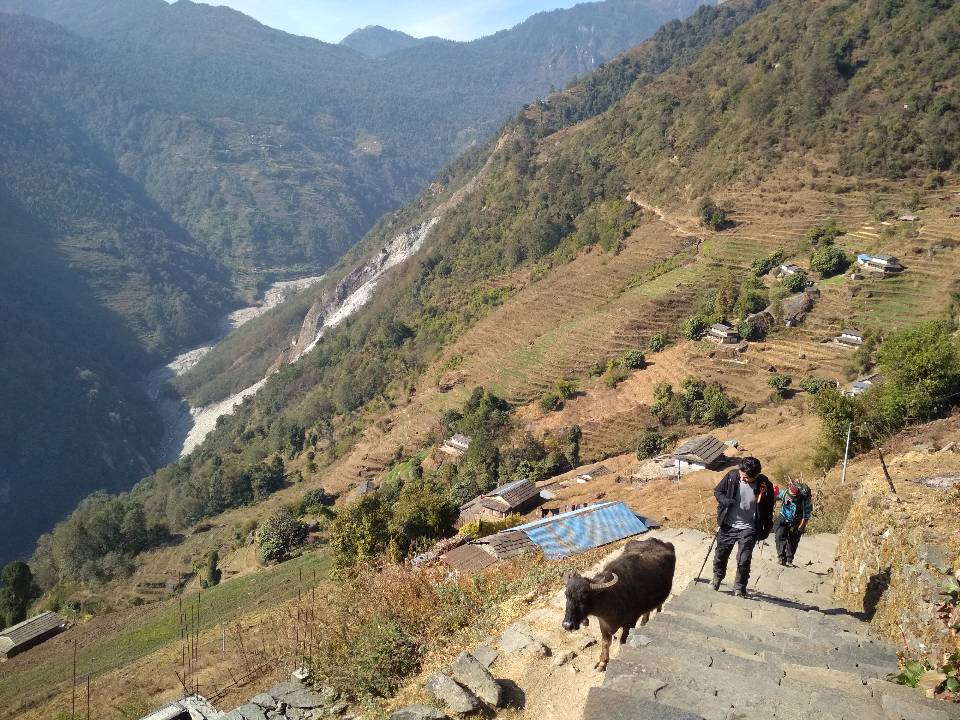
Dhaulagiri Circuit Trek is an adventurous and difficult trek that takes you thru some lovely glaciers and excessive snow-clad passes to the Dhaulagiri Base Camp which would possibly likely be a dream of any journey lover. however, proudly owning to its difficult terrain, secluded and stale crushed trail and lack of proper accommodation facility, this trek is appropriate handiest for the ones match guests with high staying power capacity. the beautiful mountain Dhaulagiri that rises at 8167m is the 6th highest mountain on the planet. The trek that initiates from a small and popular metropolis that lies at the confluence of Myagdi River and Kali Gandaki gorge and takes you to some unspoiled and much less travelled regions which have been capable of keeping its herbal beauty and splendour intact. the lush panorama, hidden valleys, high mountain passes alongside many snow-capped peaks like Mt. Dhaulagiri, Mt. Manaslu, Mt. Annapurna and different peaks is a natural boon that makes Dhaulagiri trek a herbal paradise. Dhaulagiri Circuit Trek is the trophy of crossing two excessive mountain high passes, French pass at 5,360m and Dhampus pass at 5,234 m. The trek is not just about high mountain passes and snow-clad peaks however the richness in flowers and faunas is a treasure that it holds within its jungle, hills, and unspoiled agricultural lands. The people that live in this remote location are thought in themselves. The lifestyle they live and the precise subculture that they've been treasuring since lengthy is beautiful and cute. Trek being from Beni in which you initiate your actual trekking adventure. You pass the warm and vibrant villages of Darbang, Muri, and Chariban to the Italian camp and Dhaulagiri Base camp. at the path, you pass the excessive-high mountain passes like French pass and Dhampus pass from in which you descend down to the Marpha and be a part of the Annapurna Circuit route. Dhaulagiri Circuit Trek is the most loved trekking path but because of its remoteness and certain standards to be a successful trekker. Why the Dhaulagiri Circuit Trek? For an ‘expedition feel’, due to the remote and rugged nature of the trek. Varied landscapes, from green farming villages to snowy glaciers to barren, rocky mountain vistas. The option for experienced mountaineers to climb Dhampus Peak (6,060 m). Close-up views of Dhaulagiri (8,167 m) and several other 7000 m-plus peaks. As a circuit trek, there is no retracing of your footsteps in the second half. Best season Spring (March-May) and autumn (September-November) trekking seasons.
Journey at a glance
Day 01: Arrival in Kathmandu (1,350m) and transfer to the hotel — Upon your arrival at Kathmandu airport, one of our representatives will greet you and will transfer you to the hotel. Welcome Evening dinner at authentic Nepalese restaurant with cultural performance. Airport pickup by private Car, Van or Bus (According to group size) Tribhuvan International Airport (KTM), Kathmandu, Bagmati, Nepal. Day 02: Kathmandu Valley Sightseeing and preparation day — Today we are going to visit four of the UNESCO world heritage listed sites in Kathmandu Valley. After breakfast, we start for Kathmandu valley city tour which includes the UNESCO heritage site in the City valley. Pashupatinath Temple is one of the most sacred pilgrims’ sites for Hindus all over the world and It is the temple of Lord Shiva, the temple where the dead bodies are criminated on the Bagmati River. Boudhanath Stupa is one of the biggest stupas in Asia and holiest Buddhist Pilgrims and famous tourist destination in City Valley and It is also famous for over 50 Tibetan gompas or monasteries. Kathmandu Durbar Square holds the places of the ancient king palace who ruled over the Kathmandu Kingdom. Swayambhunath(Monkey Temple) is located in the heart of the City valley and It is another famous tourist destination and holiest Buddhist pilgrims in Kathmandu Valley. Day 03: Drive from Kathmandu – Beni (1,000m,9h) — We will be heading towards Beni which is also the starting point for our trek. We need to drive on Prithivi Highway from Kathmandu. The drive will last for about 9 hours. The drive will be long but the views along the highway are beautiful and will pass through the famous lake city of Pokhara. Overnight at teahouse Day 04: Drive:Beni – Dharapani (1560m,6h) — We will move towards Darbang. From Darbang we will walk about 3-4 hours to reach Dharapani. Following the river(Myagdi Khola). On the way, we will see Dhaulagiri range, Gorje himal. We will cross Magar and Gurung village. Overnight camping.Walking duration: 6 Hours Cumulative Ascend Value: 783 mCumulative Descend Value: 145 m Day 05: Dharapani – Muri (1850m,6h) — After crossing the river to its West Bank as you leave Phedi, the trail starts climbing in earnest and there will be many switch-backs until you arrive at the ridge and the angle of ascent eases. Again the trail climbs steeply to the villages of Muri. Continue your trek to Sibang and Mattim. From here you continue up an incline to the snout of the ridge, descend to the Gatti Khola and reach Phalai Gaon (1,810m). Cross the Dhara Khola to once again emerge on the west bank of the Myagdi Khola and then climb a ridge to the large Magar village of Muri.Overnight camping. Walking duration: 6 HoursCumulative Ascend Value: 693 mCumulative Descend Value: 396 m Overnight at teahouse Day 06: Muri – Bagar (2080m,6h) — Starting from Muri it will take us about 6 hours to reach the Baghara. Today we will be crossing a river called Dhora Khola. Alongside Dhora Khola notice terrace farmlands. From here we will climb the mountain right to us until we reach Ghorban Dhara. Ghorban Dhara provides the perfect view of Ghustung south which is elevated at 6465m. We will then start following the path alongside Myagdi Khola until we reach Naura. We will climb right up the mountainside to Ghorban Dhara. From Ghorban Dhara, we will get to see Ghustung South (6465m). Before reaching the Naura we follow the riverbank path of Myagdi Khola. From Naura, we ascend begins on the mountainside. Sometimes of uphill climbing, and a path that traverses the steep grass-covered hills. And trailing further away in a well-constructed zigzag stone steep paths while descending through a forested area, emerging to a ridge snout Bagar becomes visible elevate at 2050m.Overnight camping.Walking duration: 6 Hours Cumulative Ascend Value: 1039 mCumulative Descend Value: 795 m Day 07: Bagar – Dobang (2545m,5h) — The trail first descends through terraced fields to a small ridge, then through a forest to Jyardan which is the most remote permanent settlement in this part. After the settlement, a high winding path crosses a rocky area which then descends before climbing again to Lipshe where there is one single hut. The trail continues through a forest to Lapche Kharka and then climbs to the level area at Dobang. Dobang is a largish clearing in the forest with two huts and a large area for camp.Overnight camping.Walking duration: 5 Hours Cumulative Ascend Value: 892 mCumulative Descend Value: 503 m Day 08: Dobang – Sallaghari (3445m,6h) — The trail continues through the dense, lush vegetation of ferns, bamboo and rhododendrons. We cross to the east bank of the Myagdi Khola on a new cantilever bridge and then camp at a clearing in the forest at Sallaghari. Overnight camping.Walking duration: 6 Hours Cumulative Ascend Value: 680 mCumulative Descend Value: 130 m Day 09: Sallaghari – Italian BC (3660m,4h) — From Sallaghari we walk through Pine trees, Rhododendron, Birch, once above the tree line heather, juniper and azaleas. The trail traverses through forest and then climbs to a grassy area on the lateral moraine where Italian Base Camp is located. High above camp is the impressive west face of Dhaulagiri with Tsaurabong Peak visible on the other side of the valley. Overnight camping. Walking duration: 4 HoursCumulative Ascend Value: 1310 mCumulative Descend Value: 230 m Day 10: Rest Day for Acclimatization. — Today we can go for a walk to explore the Italian Base Camp or relax in camp. This day is essential for acclimatisation before ascending further in altitude towards main Dhaulagiri Base Camp. Overnight camping. Day 11: Upper Vungini (Italian BC) – Japanese BC (3890m,5h) — Today is a shorter walk although essential for acclimatization process, unlike most other itineraries we believe in having two nights at Glacier Camp located between Italian Base Camp and main Dhaulagiri Base Camp (otherwise going from 3,660m to 4,740m will result in altitude sickness). From Italian Base Camp, the trail descends steeply down the lateral moraine to gain the glacier, in the past, we have fixed a rope here to help the group and trek crew. We cross the glacier and then traverse along the moraine on the left side of the Chonbarden gorge. We walk along talus in the impressively narrow Chonbarden gorge to the snout of the Chonbarden glacier and then continue for another hour to Glacier camp. There are a number of ledges levelled in the ice of the glacier for our tents. Overnight camping.Walking duration: 5 Hours Cumulative Ascend Value: 695 mCumulative Descend Value: 124 m Day 12: Japanese BC – Dhaulagiri BC(4748m,5h) — We follow a rough trail along the moraine covered glacier to Dhaulagiri Base Camp. From Base Camp the view is impressive with Dhaulagiri I, Tukuche Peak and Little Eiger and further to the west lay Dhaulagiri II (7,751m) and IV (7,618m). One can also see the start of the climbing route through the icefall. In season there are likely to be expeditions camped on the moraine strip at Base Camp. Overnight camping.Walking duration: 5 Hours Cumulative Ascend Value: 495 mCumulative Descend Value: 43 m Day 13: Dhaulagiri BC – French Col(5360m) – Hidden Valley (5140m,7h) — After an early breakfast, we walk out of Base Camp along the moraine strip to cross over to the left-hand side of the Upper Chonbarden glacier. A high lateral moraine ridge is visible further up the valley; we gain this by following a steep trail across the screen and talus. Once on the lateral moraine ridge there are superb views back down the valley to Dhaulagiri I and Tukuche Peak. At a large cairn on the lateral moraine ridge, we turn off to make the final ascent to French pass . The approach to the pass is up easy angled snow slopes and as usual in Nepal, the top is marked by Buddhist prayer flags and cairns. The view from the summit of the pass is superb with Sita Chuchura, the peaks of the Mukut Himal, Tashi Kang, Tukuche Peak and of course Dhaulagiri I. The descent from the pass is on moderate snow slopes as we enter Hidden Valley. After a long descent, you arrive at camp next to the river not far from the base of Dhampus Peak. You will notice once crossing into Hidden Valley there is only sparse vegetation of isolated patches of moss and grass as this area is now in an area affected by the rain shadow effect of Dhaulagiri. Overnight camping.Walking duration: 7 Hours Cumulative Ascend Value: 690 mCumulative Descend Value: 223 m Day 14: Hidden Valley – Cross Thapa Pass (5244m) – Kalo Pani (5100m,7h) — This is a long day and by far the toughest on Dhaulagiri Circuit trek. After an early start from camp, we start the climb up a moderate snow slope to gain Dhampus pass. There are fine views of Dhampus Peak to the left of the pass and to the right the beautiful ice flutings of Tukuche Peak. From the summit of the pass, the trail descends pass for about 100m before start to traverse left into Kali Gandaki valley. Depending on the snow and ice conditions crampons may be needed for group & porters at this point. There is a very long traverse on snow usually taking about four hours before starting the steep descent to Kalo pani. Throughout this traverse, there are stunning views of Nilgiri and the western end of the Annapurna Massif. Overnight camping.Walking duration: 7 HoursCumulative Ascend Value: 164 mCumulative Descend Value: 314m Day 15: Kalo Pani – Marpha (2670m,5h) — There is a very long traverse on snow usually taking about five hours before starting the steep descent to Kalo pani. Throughout this traverse, there are stunning views of Nilgiri and the western end of the Annapurna Massif. There is a long descent today to the village of Marpha located in the Kali Gandaki valley. Marpha village has a Buddhist monastery, Tibetan whitewashed houses and paved streets. It is also famous for its apple orchards so well worth stopping here to get a glass of apple juice at one of the lodges. Overnight in Marpha. Walking duration: 5 HoursCumulative Ascend Value: 1082 mCumulative Descend Value: 2332 m Day 16: Marpha – Jomsom (2710m,3h) — Jomsom is the best place in town located opposite the airport. After hot showers you can explore Jomsom, check emails than in the evening the cooks will produce a special last meal together. Later on, we will hand out tips to our crew as a thank you for all their hard work throughout the trek. Overnight: teahouse lodge.Walking duration: 3 Hours Cumulative Ascend Value: 50 mCumulative Descend Value: 1233 m Day 17: Fly:Jomsom – Pokhara (35min) — Early morning we will take a short picturesque flight to Pokhara. The view of Annapurna and Dhaulagiri mountains and the world’s deepest gorge, Kali Gandaki is stunning. Relax whole day in Hotel or wander around Lake Side with fascinating mountains panorama view and nature charming. Explore the various interesting places like Mahendra Cave, David’s fall and the various lakes of course. Day 18: Drive: Pokhara – Kathmandu (7h) — After breakfast, we leave the beautiful lake city of Pokhara and drive towards Kathmandu. After reaching Kathmandu, we have the rest of the day off to rest or do some souvenir shopping. Day 19: Free day in Kathmandu — Free day for shopping and other activities in Kathmandu. Day 20: Final Departure — Our representative transfers you to the Kathmandu airport to catch your returning flight back home. Thank you for Travelling with Churen Himal Treks and Tours. Airport drop by private Car, Van or Bus (According to group size) Tribhuvan International Airport (KTM), Kathmandu, Bagmati, Nepal.
Day-by-day itinerary
Day 10Rest Day for Acclimatization. — Today we can go for a walk to explore the Italian Base Camp or relax in camp. This day is essential for acclimatisation before ascending further in altitude towards main Dhaulagiri Base Camp. Overnight camping.
Confirm daily arrangements with the provider.
Day 11Upper Vungini (Italian BC) – Japanese BC (3890m,5h) — Today is a shorter walk although essential for acclimatization process, unlike most other itineraries we believe in having two nights at Glacier Camp located between Italian Base Camp and main Dhaulagiri Base Camp (otherwise going from 3,660m to 4,740m will result in altitude sickness). From Italian Base Camp, the trail descends steeply down the lateral moraine to gain the glacier, in the past, we have fixed a rope here to help the group and trek crew. We cross the glacier and then traverse along the moraine on the left side of the Chonbarden gorge. We walk along talus in the impressively narrow Chonbarden gorge to the snout of the Chonbarden glacier and then continue for another hour to Glacier camp. There are a number of ledges levelled in the ice of the glacier for our tents.
Confirm daily arrangements with the provider.
Day 12Japanese BC – Dhaulagiri BC(4748m,5h) — We follow a rough trail along the moraine covered glacier to Dhaulagiri Base Camp. From Base Camp the view is impressive with Dhaulagiri I, Tukuche Peak and Little Eiger and further to the west lay Dhaulagiri II (7,751m) and IV (7,618m). One can also see the start of the climbing route through the icefall. In season there are likely to be expeditions camped on the moraine strip at Base Camp.
Confirm daily arrangements with the provider.
Day 13Dhaulagiri BC – French Col(5360m) – Hidden Valley (5140m,7h) — After an early breakfast, we walk out of Base Camp along the moraine strip to cross over to the left-hand side of the Upper Chonbarden glacier. A high lateral moraine ridge is visible further up the valley; we gain this by following a steep trail across the screen and talus. Once on the lateral moraine ridge there are superb views back down the valley to Dhaulagiri I and Tukuche Peak. At a large cairn on the lateral moraine ridge, we turn off to make the final ascent to French pass . The approach to the pass is up easy angled snow slopes and as usual in Nepal, the top is marked by Buddhist prayer flags and cairns. The view from the summit of the pass is superb with Sita Chuchura, the peaks of the Mukut Himal, Tashi Kang, Tukuche Peak and of course Dhaulagiri I. The descent from the pass is on moderate snow slopes as we enter Hidden Valley. After a long descent, you arrive at camp next to the river not far from the base of Dhampus Peak. You will notice once crossing into Hidden Valley there is only sparse vegetation of isolated patches of moss and grass as this area is now in an area affected by the rain shadow effect of Dhaulagiri.
Confirm daily arrangements with the provider.
Day 14Hidden Valley – Cross Thapa Pass (5244m) – Kalo Pani (5100m,7h) — This is a long day and by far the toughest on Dhaulagiri Circuit trek. After an early start from camp, we start the climb up a moderate snow slope to gain Dhampus pass. There are fine views of Dhampus Peak to the left of the pass and to the right the beautiful ice flutings of Tukuche Peak. From the summit of the pass, the trail descends pass for about 100m before start to traverse left into Kali Gandaki valley. Depending on the snow and ice conditions crampons may be needed for group & porters at this point. There is a very long traverse on snow usually taking about four hours before starting the steep descent to Kalo pani. Throughout this traverse, there are stunning views of Nilgiri and the western end of the Annapurna Massif.
Confirm daily arrangements with the provider.
Day 15Kalo Pani – Marpha (2670m,5h) — There is a very long traverse on snow usually taking about five hours before starting the steep descent to Kalo pani. Throughout this traverse, there are stunning views of Nilgiri and the western end of the Annapurna Massif. There is a long descent today to the village of Marpha located in the Kali Gandaki valley. Marpha village has a Buddhist monastery, Tibetan whitewashed houses and paved streets. It is also famous for its apple orchards so well worth stopping here to get a glass of apple juice at one of the lodges. Overnight in Marpha.
Confirm daily arrangements with the provider.
Day 16Marpha – Jomsom (2710m,3h) — Jomsom is the best place in town located opposite the airport. After hot showers you can explore Jomsom, check emails than in the evening the cooks will produce a special last meal together. Later on, we will hand out tips to our crew as a thank you for all their hard work throughout the trek.
Confirm daily arrangements with the provider.
Day 17Fly:Jomsom – Pokhara (35min) — Early morning we will take a short picturesque flight to Pokhara. The view of Annapurna and Dhaulagiri mountains and the world’s deepest gorge, Kali Gandaki is stunning. Relax whole day in Hotel or wander around Lake Side with fascinating mountains panorama view and nature charming. Explore the various interesting places like Mahendra Cave, David’s fall and the various lakes of course.
Confirm daily arrangements with the provider.
Day 18Drive: Pokhara – Kathmandu (7h) — After breakfast, we leave the beautiful lake city of Pokhara and drive towards Kathmandu. After reaching Kathmandu, we have the rest of the day off to rest or do some souvenir shopping.
Confirm daily arrangements with the provider.
Day 19Free day in Kathmandu — Free day for shopping and other activities in Kathmandu.
Confirm daily arrangements with the provider.
Day 20Final Departure — Our representative transfers you to the Kathmandu airport to catch your returning flight back home. Thank you for Travelling with Churen Himal Treks and Tours.
Confirm daily arrangements with the provider.
What's included in your experience
Included
- Price Includes:
- 1. Airport pick up and drop (both international and domestic)
- 2. 4-night hotel in Kathmandu with BB
- 3: Fresh Meals on full board ( Breakfast + Lunch + Dinner) with hot drinks and Tea/ Coffee
- 4: Trekking Information Management System ( TIMS) Card and ACAP Fee.
- 5: Transportation cost for our trekking crew
- 6: Guided sightseeing tour in Kathmandu
- 7: Domestic flight with the airport tax
- 8: All wages, equipment, food, medical and accident insurances for all involved staff in trekking
- 9: An English speaking Local Expert trekking guide, assistant guide, cook & necessary porters
- 10: Our service charge and government taxes levied in Nepal
- 11: Churen Himal Treks baggage or T-shirt
- 12: First aid medical kits for the group and the staff
- 13: Dhaulagiri region trekking Map
- 14: Welcome dinner in a typical Nepali restaurant with cultural program in Kathmandu
- 15.Camping equipment such as tents, kitchen tents, dining tent toilet tent and other required
- 16.Camping crew such as kitchen boy, cook, helpers etc
- 17.Arrangement of Emergency Helicopter service which will be paid by your Travel insurance company
Not included
- Price Excludes:
- 1: Nepal entry visa fee
- 2: International airfare
- 3: Entrance fees for sightseeing/monument visit as per the itinerary
- 4: Lunch and dinner during your stay in Kathmandu and Pokhara (except welcome dinner)
- 5: Travel insurance which has to cover emergency high-altitude rescue and evacuation compulsory
- 6: Personal expenses (shopping, snacks, boil bottled water, hot and cold drinks, hot shower, Alcohol, Wi-Fi, telephone call, battery re-charge fee), extra porters etc
- 7: Extra night accommodation in Kathmandu due to early arrival or late departure, early return from the trek.
- 8: Clothing packing items or bags, personal medical kit
- 9: Personal trekking gear ( Down Jacket and Sleeping Bags)
- 10: Any additional staff other than specified
- 11: Tips for guide and porters (Recommended by the Culture)
- 12: In case of natural calamities i.e. change of government policies, strikes, cancellation of flight due to weather, illness, itinerary modifications due to safety concerns, landslides etc the extra charge should be born by themselves.
- 13: Any other items not mentioned in “The Service Package Excludes” Section
Essential trip information
Before you go
Equipment lists for the trek It is recommended to carry the basic clothing and accessories needed for the trek. The followings belongings are suggested that should be brought, although we understand that our clients have their own preference for clothing, we have listed some useful clothing during the trek. Porters will be carrying the main luggage, which should not exceed more than 20kg (one porter will carry two people's luggage, 10 kg for each). Equipment can be bought in Kathmandu at a reasonable price. Head Sun hat or scarf Winter hat or insulating hat or a wide-brimmed hat Headlight with extra batteries Face Sunscreen Sunglasses with UV protection Face/body wipes Hands Lightweight gloves Heavyweight winter gloves Body Hiking shirts Long-sleeved shirt Hooded rain jacket Fleece jacket Lightweight cotton pants T-Shirt (bring lightweight wool) Polypropylene underwear Down jacket (available for rent in Kathmandu) Sweater Waterproof jacket and pants Footwear Hiking Boots Thick wool socks (Take an extra pair of thick light socks) Essential gear Backpack or daypack (Size depends on whether you take porter or not) Thermal bottle Water purification Trekking pole Sleeping bag (-15 degree bag is best in the high altitude trekking) Toiletries Medium size drying towel Toothbrush Toothpaste Deodorant floss Biodegradable bar soap Nail clippers Small mirror Personal accessories Money Watch Cell phone Camera Extra items First aid kit Extra passport photos and photocopies of passport Notebook and pen Binoculars Permits and regulations You'll need to purchase a TIMS card ($10) and an Annapurna Conservation Area Permit (ACAP) ($20 USD). These can be obtained independently in Kathmandu or Pokhara, or your guiding company will arrange them for you. As this is not a very popular trek, the checkpoints are quite spread out, but they appear particularly on the way down, once the main Annapurna Circuit route has been joined. This trek is not within a restricted zone, so it’s possible to trek independently, without a guide. However, this is strongly discouraged due to the difficulty of the trek, the weather conditions, the fact that tents and food will need to be carried, and that some days are spent walking and sleeping on snow. Accommodation & meals Apart from the first and last nights in Beni and Pokhara, where you will stay in hotels, this is an entirely camping trek. There are no lodges and not even any permanent settlements past Pakoban. This fact increases the effects of the cold. Food will be prepared in a camp kitchen, while guides and porters ensure that necessary provisions are carried to prepare high-energy, nutritious and tasty food. Getting to and from the trailhead This trek starts in Beni, a sizable town about 2-3 hours’ drive from Pokhara. The road to Beni is winding and through the mountains, but otherwise reasonably well-maintained. Many treks in the Annapurna region start from or pass through, Beni. The trek ends at Jomsom. While it’s possible to extend the trek and walk back to Pokhara from Jomsom (part of the classic Annapurna Circuit route), road construction in the past few years has made this a dusty and decidedly unappealing option. Plus, this is a challenging trek and most trekkers will not want to extend it due to fatigue. It’s advisable to fly from Jomsom back to Pokhara. This is a short, spectacular flight, but can sometimes be delayed or canceled due to poor weather. Level of difficulty The Dhaulagiri Circuit is a tough trek—one of the toughest in Nepal—suitable for trekkers with previous experience of trekking at altitudes above 5,000 m. The optional ascent of Dhampus Peak (6,060 m) requires basic mountaineering skills, such as knowledge of the use of ice axes and crampons. Three days in a row are spent trekking over snow above 5,000 m, without an easy way down. Adding to the challenge is the cold—as this is a camping trek, there are no cosy lodges to retreat to at night. The Dhaulagiri Circuit trek is not one for beginner trekkers or first-time visitors to Nepal, but those with more experience will find the rewards are high. Best Time to Trek The weather is one of the most important factors to look at when deciding to trek to The Ganesh Himal Trek. It is best suited to trek during the spring, summer and autumn. During the winters and monsoon, it becomes difficult to trek due to strong winds, storms and slippery trails. January – February This time is the coldest, especially from early January to early February. The temperature can be extremely cold. Though the day may be warm and admirable with clear skies, the night time would be extremely cold. It would not be suggested to trek during this time. March – April This is the best time of the season to trek in the Ganesh Himal Trek. The weather is very favourable through the trek. Stunning views of the central Himalayan range will be seen. Temperatures may start increasing from the mid of March and with clear skies, snow mountains will be seen at their best. Many trekkers often succeed their expedition at this time. On the journey, the rhododendron flowers will be blooming at its best with a variety of colours. May – June This is also the perfect time for trekking right before the rainfall. Nepal starts its rainfall from the end of June till mid-August. The season of spring and summer makes the trek much more enjoyable. July – August The rainfall hits at its peak during this time. Due to rainfall, it would not be advisable to trek during this season as the difficulty would arise. The trails would be very slippery. Having to trek by ridges and descending down the trails would make it risky. September – October As winter slowly begins, snow falls begin in the Ganesh Himal Region and it eventually tough to trek. Nights will start to get colder. November is the busy season as it is the clearest month with sparkling days. The day time temperatures are very stable and constant and due to this, the view of the clear blue sky and the mountain is phenomenal. From December, the temperature starts to get cold and begins to snow. The weather in the Himalaya is so unpredictable and the temperature may change quickly from day tonight. Acclimatization The trek consists few days at over 3500m for acclimatization, where there is a significant risk of being affected by altitude sickness, also called acute mountain sickness. Altitude sickness is preventable but can be fatal if the symptoms are ignored. Our trip itinerary is designed for slow and steady ascending so the body can adapt to the new altitude. All our trekking leader and guide have extensive first aid training and well-experienced in the Himalaya. We urge you to inform your group leader and guide at first signs of the symptoms. We guarantee that your health will be at reliable hands. Your trek leader or guide will suggest precautions. The best way is to take your time and drink plenty of water, at least 4 litres a day. If it is severe the only cure for altitude sickness is to descend immediately. Please note that your group leader has the ultimate responsibility to decide or stop your ascent based on your overall condition. It is essential to keep in mind that some are more vulnerable than others. Also, your group leader has the definitive response to determine whether you can proceed the trek based on your health conditions. Trip Grade: Fitness level, Medical, and Health The trails around the Ganesh Himal is challenging yet rewarding. On average, the walk per day will be around 4 to 7 hours, depending on the destination and the number of breaks we take. The trail is mostly uphill or steep descents, with rocky and stone-paved paths. It is not impossible to go to these treks for a regular person, but remaining fit and exercising well will make the trek more comfortable and enjoyable. Former trek experience or regular exercises and doing yoga is an advantage for the trekker. Besides, if you love trekking, you can make it happen anyways and conquer your dreams. This trek, however, is not recommended for individuals with sensitive medical conditions like heart or lung disease. Since the majority of the trek involves moderate to strenuous climbing, it may prove to be dangerous for the health of such people. We recommend you to consult with your doctor before attempting to attain this trek. Also, we make sure to provide you with all the necessary medical kit supplies you may need in the trek. Trekking group/single The group for the trek usually consists from 2 to 12 people. A leader, assistant guide, and porters will accompany a group of 8 throughout the trek. It is a great time to enjoy your hike with various trekkers from around the world. You may choose to trek with a random group or limit it to your own. We will also be glad to organize a private trek with your friends and family only. We generally recommend travelling in a group rather than an individual due to safety concerns. Also, it is always good when you can share your happiness and experience once you conquer your trek. A typical day on the trek Every day will be rewarded with a unique experience of trekking, climbing enjoying the scenery, taking photos and exploring the local villages. During the expedition, experienced friendly and qualified expert Sherpa will share information and historical facts about the places as they accompany us throughout the trek. The porters who carry our luggage will also accompany us. However, we will be carrying our own small backpack with the necessary items. The day starts with an early morning hot cup of tea/coffee. After packing our bags and gorging on a wholesome breakfast, we set off on the days walk around 7 AM to 8 AM, depending on the duration and nature of the days walk. After trekking for three to four hours, we will have lunch around midday on the route to the next destination, and we continue after about an hour of rest. The afternoon walk is generally shorter: about two to three hours. Once we reach our overnight lodge/tea house/tent, we snack on the extra dietary food. We will also have free time to explore nearby places. Dinner is served around 6 PM to 7 PM. Before going to bed, we will spend some quality time in friendly conversations and discuss the experience of that day. The expedition leader/guide will brief us about the next day’s plan. After this briefing, we enjoy onboard games like monopoly, cards and watch available mountaineering documentaries. Most of the foreigners indulge in light and fun learning of Nepalese language from our crew or read books before heading off to bed for a well-deserved sleep. Communication on trek There is mobile phone coverage on most of the routes, But this service may not be reliable, depending on which network you use. Upon your request, we can provide you with a separate local SIM card with good access for talking to family and friends through your cell phone. although Some days at high altitude, there is no mobile network facility. We'll communicate with all our valuable clients through our leader at least once a day to make sure you're alright and satisfied with our service. Also, depending on the kind of network you use, the signal might fluctuate as you climb uphill. On your request, we can provide you with a separate local sim-card for communication. Extra personal expenses on trekking Churen Himal Treks tries to provide all extra expenses excluded from the package. Meals and accommodations in Kathmandu are up to our clients themselves as all kinds of hotels/lodges (both luxury & budget) can be booked easily online or even we can do it for on request. All our valuable clients will have to bring personal spending money with them to cover the costs of accommodations in Kathmandu, visa process, travel insurance policy purchase, beverages, snacks for the trek, hot and cold drinks, tips to the trekking crew members, souvenirs etc. We recommend bringing cash (dollars) that can be changed to rupees here cause during the trek as only Nepalese currency is accepted. Electricity and battery recharge, water on the trek Throughout the lodges at the Ganesh Himal trek, electricity for the camera and mobile battery recharge is available by paying a price at all lodges. Most lodges have hydroelectricity and some of them have used the solar panels. Water during the trek, you can buy either packed mineral water from local lodges and en route shop or filling boiled water with an extra cost. A water purification pill is suggested in drinking water. You shouldn't drink water from the river, tap, well up there cause it might not be drinkable as it seems. Travel insurance Trekking in the Ganesh Himal Trek requires slightly proactive and reactive preparedness. The high mountains are not a place to visit casually as serious sickness and other casualties are supposed to unexpectedly happen. Make sure you have insured against this incident before starting the trek. Travel insurance is also a part of the booking condition for an adventure trek in Nepal. To join in the Ganesh Himal trek, at a minimum, a comprehensive travel insurance policy is a must to cover medical and emergency repatriation with inclusively helicopter rescue and evacuation expenses for trekkers at high altitude. We can recommend insurance companies to help you but we don’t directly get involved in the sale of an insurance policy. Members can be refused to be included in the trekking based on insufficient, improper or absence of travel insurance policy. Trekking members are kindly requested to send their detailed insurance information once they book for trekking. In case of emergency situations, we will be using the insurance policy and informational documents you sent us. This will help us arrange a quick and effective rescue operation, transfer for emergency medical help etc. You are requested to send the details insurance information after you have booked the trek. Make sure your insurance company accepts the cost incurred for mountain rescue service even at the highest elevation of the trek. Please ensure that the insurance company includes the cost incurred for mountain rescue service at the highest elevation of the trekking. Passport and visa All foreigners except Indian nationals must have a valid visa to enter into Nepal. Visa is available on arrival at Tribhuvan International Airport upon entry in Kathmandu, Nepal and at Nepal borders of India and Tibet. Visa can be easily extended at the central immigration office. www.immigration.gov.np; Visa application requires a passport with at least 6 months until expiration and one passport -size photo. The current cost of a visa for 30 days is US$40(to be paid in cash) for 30 days that is required to make in cash. Other currencies are also accepted although rates may differ. Other nationalities should check entry requirements. visitors are requested to specify return flight tickets, time intended to stay in Nepal. we recommended you schedule at least 1-2 day extra at the end of the trip just in case there is a delay. If no delay occurs we can arrange an additional activity for your time in Nepal To help calculate the exact dates of these crossings we have found the website www.timeanddate.com to be very useful. The children under the age of 10 will get a free visa. Please be advised to check the current regulation. Visa regulation can change without prior notice. Citizens of China, as well as citizens of South Asian Association for Regional Cooperation(SAARC) countries (Bangladesh, Bhutan, India, Maldives, Pakistan and Sri Lanka), get the free visa. countries not entitled to get a visa upon arrival are Nigeria, Ghana, Zimbabwe, Swaziland, Cameroon, Somalia, Liberia, Ethiopia, Iraq, Palestine, and Afghanistan If you are a citizen of one of these countries, please contact your local Nepalese embassy. Money exchange Nepali Rupees (NPR) is the local currency. (1 USD = ~ Rs.100 NPR). We can exchange most of the foreign currencies through local banks and legitimate money exchanges in Kathmandu and all over Thamel. Small amounts of cash can also be exchanged at the hotel. The ongoing rate of exchange is visibly displayed. The government of Nepal has banned the import, export and use of 500 and 1000 Indian Rupee note in Nepal. You should ensure that you are not carrying these notes on arrival in Nepal as they will be confiscated and you may also be fined. Despite having security advantage of traveller's cheques, we prefer cash exchange to avoid hassles like a lengthy process and high rate of commission at the banks. You can withdraw cash (in Rupees only) from one of the many ATMs in Kathmandu and Thamel itself. There are quite a several ATMs that are open around the clock. The maximum withdrawal amount is 35,000 Rupees for a 500 Rupees processing fee if you are using your foreign card. If you use the money exchange facility at banks and financial institutions the service fee charge imposed is about 4% or more depending upon the bank. During the trek, there are no banks and money exchange services so you should exchange your money in Kathmandu only, depending on how much personal expense you require as in Himalayan region people only accept Nepalese Currency Most of the established banks in Asia will not accept foreign currency notes that are old, torn or faded. Please ensure that you have new, clean notes How Much Luggage Can I take during the Trek? The weight limit for your luggage is 10 kg per trekker, Porters will be assigned to carry your luggage, two people will be assigned with one porter, and combined luggage should not exceed more than 20kg. We never overload our porters. But you should carry your own knapsack or backpack (with your valuables or anything important) on your own. Only carry what are essentials, you can leave any excess baggage either at your hotel or at the Churen Himal Treks store for free and it'll be completely safe. We'll recheck everything (Luggage, equipment, etc.) in our briefing before we start our journey from our Office. Ganesh Himal Trek Safety Churen Himal Treks guarantees our valuable clients safety, security, and satisfaction. Safety is the utmost important concern for us. For the trek, we will be carrying all the necessary gear, equipment, and first aid kits. Our leaders and guides have vast knowledge and have extensive first aid training. If a trekker falls sick due to the altitude, it is entirely up to the trekker to decide if he/she will further continue, as health is very important. In case of emergency, the rescue helicopter will always be ready to bring you back from the higher elevation. During the trek, every group will be together so that everyone is safe and won't wander off alone. Responsible Travel " Take nothing but pictures. Leave nothing but footprints. Kill nothing but time." We strongly believe that our environment has to be protected as tourism may bring negative effects on it. We highlight the positive aspects of tourism on the environment. Furthermore, Churen Himal Treks works together with the Kathmandu Environmental Education Project (KEEP) and organizes eco-friendly trips about most environmentally sensitive and culturally rewarding that meet the expectation of both travellers and communities. Churen Himal Treks Crews During the trek, you will be accompanied by our local best-trained and well-experienced guides / Sherpa to make your journey even more comfortable and memorable. All guides are well trained licensed with a prior experience they have spent years trekking / climbing the peak all over the world. Porters will also be assigned to carry your luggage. Two people will be assigned to one porter. Combined luggage should not exceed more than 20 kg. We never overload our porters. We divide a proportion of one porter for two members and one assistant guide with 8 members. If required we can also have one porter per person. Our crew members are the local people of high Himalaya remote areas and their physical endurance and heredity nature can live easily and comfortably at high altitude without being affected. All our staffs are very valuable to us, they are well paid and we take care of their insurance, clothing, food and lodging throughout the expedition. All our Guides and Porters receive Medical care when ill or injured. We always make sure that they are happy as we believe that only happy people can make others happy The local expert trek leader to guide you is specialized under the following subject. We provide basic accommodation for our guides and porters or tent with the sleeping gear and we also provided them with food and warm drinks. Intensive Wilderness First Aid Authorized certificate of Trekking Guide Training Fluency speaking English and other major Languages Conservation and biodiversity Rock climbing Climbing Mountain Tipping Most importantly, tipping is at traveller’s discretion and should be relied on good service that does not form the part of wages for your Guides, porters and crew although they are very much appreciated. In Nepalese culture, a tip is an accepted and honoured way to say thank you (Dhanyabada) for good service. Normally the tips are offered at the end of the trek and this is best done as a group. Most groups will give the trips in farewell dinner on the last evening or last day of the trek, to mark the end of the trip. The amount of the trip is entirely a personal preference that may be more or less depending upon your perception of service quality, length of trip, budget and appreciation of their work. It is important to Churen Himal Treks crews who professionally take care of you all the time during the trekking, inspire excellent service and offer enriching journey- a trip of once in a lifetime experience. We ensure that all of our crews including guides and porters are paid well and treated fairly with respect. Booking and Payment Process Churen Himal Treks is a government authorized, registered, licensed and bonded as trekking and expedition operator in Nepal. The company-registered number is 12915/056/067. We are a member of Trekking Agency Association of Nepal (TAAN), Nepal Mountaineering Association (NMA). Therefore, book Churen Himal Treks trip with confidence as we are reliable.10% of payment in advance and other necessary documentation like passport copy, passport size photos, travel insurance policy, arrival and departure flight detailed can be made later but must not exceed within two weeks’ period from the booking date. The number of domestic flights for Lukla is limited but being very busy during the trekking seasons. Payment is to be made by bank transfer, western union and online payment directly from our website. The remaining trip cost can be paid whether in cash or by bank transfer and credit card when your arrival in Nepal. Furthermore, we put forward the necessary modes of payment details as per your convenient by mail. Last-minute booking It is best to book in advance but for those who aren't able to for any reason, Churen Himal Treks has a special provision for last-minute bookings. In the case of a last-minute booking with 100% trip payment within 24 hours is accepted. We do our best to operate a trek at any time but in case of a last-minute booking, we can not be responsible for delays due to changes beyond our control such as the weather, availability of lodging. Contact us for more information at 977- 9860204721 (Ranbir Gurung) or email us at churen@mos.com.np. Trip Extensions After the completion of the trek, you may want to stay a couple of days extra in Nepal. With the free time, exploring, visiting a tour of Kathmandu, sightseeing, Nagarkot view trip, Chitwan jungle safari, paragliding, rafting, canoeing are such activities that can be done. Feedback After completing the trek, there will be a farewell dinner held where Churen Himal Treks will give you a company t-shirt, digitally printed certificate of trek achievement along with a key ring. We expect nothing in return but suggestions (positive or negative) about our services and team performance. As a service provider, we will make amendments based on your feedback on our overall performance. Your feedback helps us to execute future plans by improving weaknesses as well as continuing strength aspects. We encourage you to share your real feelings and experience through the popular social networking sites and on trip advisor.
Fitness & eligibility
1
Meeting point
Kathmandu
There's more to experience.
Discover another journey, explore local experiences or find a place to stay.