Ruby Valley Trek
A journey shaped by the landscapes, people and experiences of Nepal.
Offered by Joy Travel and Tours Pvt. Ltd.
 NEPAL · TRAVEL EXPERIENCES
Discover the journey
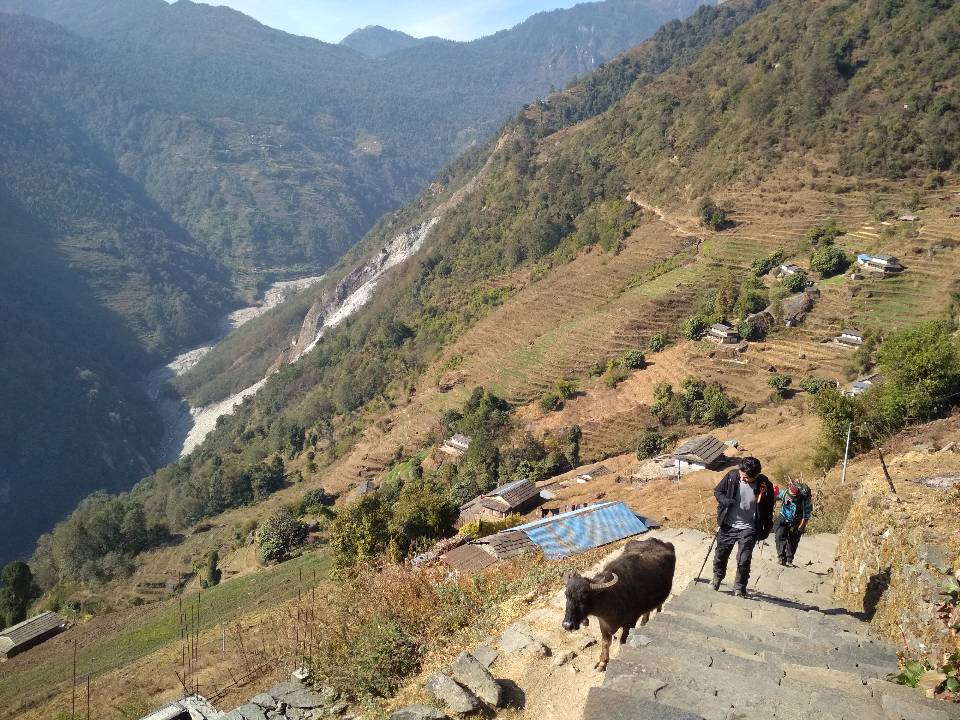
Embark on the Ruby Valley Trek, a newly established trail in Nepal introduced by TAAN (Trekking Agencies’ Association of Nepal) and the Ganesh Himal Tourism Development Committee. Situated between the Manaslu and Langtang regions, this trek partially overlaps with the Langtang trekking route. Traversing through remote terrain, the Ruby Valley trek offers the unique opportunity to stay in local homes, as there are no tea houses or lodges along the trail. Home stays provide a glimpse into the lifestyles, cultures, cuisines, and traditions of various ethnic groups including the Tamang, Gurung, Chhetri, and Brahman communities. Immerse yourself in the breathtaking scenery of the Himalayas, with vistas of Annapurna, Langtang, Ganesh Himal, and Manaslu ranges. Along the way, encounter Buddhist monasteries, Hindu temples, cascading waterfalls, serene ponds, and lush forests. This region is also home to rare flora and fauna such as rhododendrons, barking deer, red pandas, snow leopards, bears, tigers, and pheasants. The optimal time to explore this area is from March to May, when the mountains are at their best and the magnificent red rhododendrons, Nepal’s national flower, are in full bloom.
Journey at a glance
Day Day 1: Drive from Kathmandu to Syabru Besi which takes about nine hours. — Food Breakfast/lunch/dinner Accomodation LODGE Elevation 1400 You head north out of Kathmandu driving through scenic foothills and ridge line vistas to Syabru Besi passing through Dhunche. While passing along the road at the bank of Trishuli River you catch a glimpse of Ganesh Himal, terraces and green hills. As you pass through Dhunche you feel as if you are heading towards deep land. At the same time, you notice that the road is still under construction. Day Day 2: Trek from Syabrubesi to Gatlang (2238m.) via Goljung and it takes about six hours. — Food Breakfast/lunch/dinner Accomodation LODGE Elevation 2238 While trekking you experience of the Tamang culture. You can see scenery from view point. This day you walk through village. The cultural show at Goljung and Gatlang makes your trekking a memorable one. Gatlang set high on a hillside among terraced fields is a Tamang settlement. One can visit a Tamang monastery and beautiful Parvatikunda Lake at Gatlang. Day Day 3: Trek from Gatlang to Somdang (3500m.) which takes about five hours. — Food Breakfast/lunch/dinner Accomodation LODGE Elevation 3500 You walk along the graveled but motorable road. Regular transport is not available till now. While trekking, you can enjoy the spectacular mountain views of Langtang Himal ranges, Ganesh Himal, Paldor peak and many other unnamed mountain and peaks. You pass some Tamang villages where you can have a close observation of their culture and tradition. Somdang is a Tamang village. There you find zinc mines. Day Day 4: Trek from Somdang to Pansang Bhanjyang (3850m.) via Paldor Bhanjyang (3600m.) and it takes about seven hours. — Elevation 3600 You walk along the trail which moves through villages, forests and terraces. On the way you can enjoy beautiful views of green hills. Day Day 5: Trek from Pangsang Bhanjyang to Chalise that takes about seven hours. — he trail you follow is quite descent at first and then it climbs up for some distance. En route, you cross forests covered with bamboo, pine, rhododendron and waterfalls. Tipling is the first village you encounter on this route. It is a big Tamang village which is rich in mixed culture and has chorten and church. The houses are made of wood, tin and stones. People living here have their distinct life style and they are involved in making goods from bamboo sticks. You can see farming terraces where farmers grow potatoes, wheat, barley, buck wheat, maize and green vegetables. Now you have to climb down steeply until you cross a suspension bridge over Gorkhen Khola (stream). After you cross, the trails go uphill up to Sertung Chalise. It is also a Gurung village. People of this area welcome the trekkers with their local culture. Day Day 6: Trek from Chalise to Hindung which takes about five hours. — The early part of the trail goes downhill up to Menchet Khola (stream) and crossing this stream you trek steep up and then gradual up to reach Hindung. This day you pass small Tamang villages, small forests, farming terraces and green hills. Hindung is a pretty big village mainly inhabited by Tamang. The main occupation is farming and the farmers grow potatoes, millet, barley, maize, beans and other vegetables. You find mani walls and prayer flags in some part of the villages. One thing to be noticed is that it is the last village you pass while trekking to Ganesh Himal Base Camp. Day Day 7: Trek from Hindung to Rajgang Kharka and it takes about five and half hours. — After leaving Hindung you will rarely find terraces. The route up to Rajgang Kharka is ascent and flat as well. You walk along the trail covered with forests of rhododendron and local vegetation. These forests are the nestling place of various species of birds and wild animals. Rajgang Kharka is surrounded by beautiful forests and grassland. Except winter season the local people bring domestic animals especially sheep for grazing. Day Day 8: Trek from Rajgang Kharka to Kalo Seto Kunda (Black and White Lake) Ganesh Himal Base Camp which takes about six hours. — The trail is narrow and moves mostly uphill and leveled path somewhere. You walk along the trail covered with forests for a few hours. Towards the ending the trail moves along the land where you rarely find any trees. You find alpine grass here due to high altitude. At Kalo Seto Kunda there are two lakes of holy significance. The surface of Kalo or Black Lake is covered with black stones. On the contrary the surface of Seto Kunda or White Lake is covered with white shinning stones. During winter season these lakes are frozen. Day Day 9: Rest day at the Base Camp. — You can have an excursion in and around Kalo Seto Kunda (Black and White Lake). From here you can enjoy the majestic views of Ganesh Himal, Paldor Himal and many others. Day Day 10: Trek from Ganesh Himal Base Camp to Rajgang Kharka and it takes about six hours. — You trek along the descent and narrow path where you find alpine grass on both sides. Day 11 Trek from Rajgang Kharka to Chalise (2000m.) which takes about six hours. The trail moves downhill all the way to Chalise. While trekking you pass forests till Hindung and crossing it you find a few Tamang villages. Trek from Rajgang Kharka to Chalise (2000m.) takes about six hours. The trail moves down hill all the way to Chalise. While trekking you pass forests till Hindung and after crossing it you find few Tamang villages. You camp for the night. Day Day 11: Trek from Chalise to Laba village (1750m.) takes about six hours. — Elevation 1750 You trek downhill all the way to Laba Besi and trek uphill to reach Laba village. This day you pass pine forests, Tamang villages, farming terraces, green hills and villages at far distance. Laba is a beautiful Gurung village with its own tradition and culture. You camp for the night. Day Day 12: Trek from Laba village to Manyang Bhanjyang (2934m.) takes about five hours. — Elevation 2934 This day you trek through beautiful rhododendron and pine forests. These forests are the home of various species of birds and wild animals. The trail moves up hill all the way to Manyang Bhanjyang. From here you can see the first glimpse of Ganesh Himal. While trekking you pass Khading village mainly resided by Tamang and Gurung. Manyang Bhanjyang is a ridge and you find forests and grassland here. This is a perfect place for camping as your camping site is surrounded by rhododendron and oak forests. You camp for the night. Day Day 13: Trek from Manyang Bhanjyang to Majhgaun (2200m.) takes approximately six hours. — Elevation 2200 To reach Majhgaun you have to trek along gradual descent path and after some time steep descent path but again you move downward toward the ending point. On the way you pass forests of rhododendron and oak, villages, farming terraces and green hills. This day you may catch a glimpse of Manaslu range, Buddha peak on a clear weather and other unnamed mountains and peaks. As you enter Majhgaun you will find local people being engaged in farming. You camp for the night. Day Day 14: Trek from Majhgaun to Budathum takes about five hours. — You walk along the trail dominated with villages, forests, streams and terraces. This day you can enjoy the scenic beauty of green hills. Budathum is a small town with local old market. This village is pre dominated by Newar community. From here you can enjoy the spectacular views of Manaslu range at far distance. Stay overnight at camp. Day Day 15: Drive from Budhathum to Kathmandu — Elevation 1400 After your early morning breakfast, you will drive from Budathum to Kathmandu that takes about 6 hours. Your drive passes through villages, rivers and green hills.
Day-by-day itinerary
Day 1Drive from Kathmandu to Syabru Besi which takes about nine hours. —
Confirm daily arrangements with the provider.
Day 2Trek from Syabrubesi to Gatlang (2238m.) via Goljung and it takes about six hours. —
Confirm daily arrangements with the provider.
Day 3Trek from Gatlang to Somdang (3500m.) which takes about five hours. —
Confirm daily arrangements with the provider.
Day 4Trek from Somdang to Pansang Bhanjyang (3850m.) via Paldor Bhanjyang (3600m.) and it takes about seven hours. —
Confirm daily arrangements with the provider.
Day 5Trek from Pangsang Bhanjyang to Chalise that takes about seven hours. — he trail you follow is quite descent at first and then it climbs up for some distance. En route, you cross forests covered with bamboo, pine, rhododendron and waterfalls. Tipling is the first village you encounter on this route. It is a big Tamang village which is rich in mixed culture and has chorten and church. The houses are made of wood, tin and stones. People living here have their distinct life style and they are involved in making goods from bamboo sticks. You can see farming terraces where farmers grow potatoes, wheat, barley, buck wheat, maize and green vegetables. Now you have to climb down steeply until you cross a suspension bridge over Gorkhen Khola (stream). After you cross, the trails go uphill up to Sertung Chalise. It is also a Gurung village. People of this area welcome the trekkers with their local culture.
Confirm daily arrangements with the provider.
Day 6Trek from Chalise to Hindung which takes about five hours. — The early part of the trail goes downhill up to Menchet Khola (stream) and crossing this stream you trek steep up and then gradual up to reach Hindung. This day you pass small Tamang villages, small forests, farming terraces and green hills. Hindung is a pretty big village mainly inhabited by Tamang. The main occupation is farming and the farmers grow potatoes, millet, barley, maize, beans and other vegetables. You find mani walls and prayer flags in some part of the villages. One thing to be noticed is that it is the last village you pass while trekking to Ganesh Himal Base Camp.
Confirm daily arrangements with the provider.
Day 7Trek from Hindung to Rajgang Kharka and it takes about five and half hours. — After leaving Hindung you will rarely find terraces. The route up to Rajgang Kharka is ascent and flat as well. You walk along the trail covered with forests of rhododendron and local vegetation. These forests are the nestling place of various species of birds and wild animals. Rajgang Kharka is surrounded by beautiful forests and grassland. Except winter season the local people bring domestic animals especially sheep for grazing.
Confirm daily arrangements with the provider.
Day 8Trek from Rajgang Kharka to Kalo Seto Kunda (Black and White Lake) Ganesh Himal Base Camp which takes about six hours. — The trail is narrow and moves mostly uphill and leveled path somewhere. You walk along the trail covered with forests for a few hours. Towards the ending the trail moves along the land where you rarely find any trees. You find alpine grass here due to high altitude. At Kalo Seto Kunda there are two lakes of holy significance. The surface of Kalo or Black Lake is covered with black stones. On the contrary the surface of Seto Kunda or White Lake is covered with white shinning stones. During winter season these lakes are frozen.
Confirm daily arrangements with the provider.
Day 9Rest day at the Base Camp. — You can have an excursion in and around Kalo Seto Kunda (Black and White Lake). From here you can enjoy the majestic views of Ganesh Himal, Paldor Himal and many others.
Confirm daily arrangements with the provider.
Day 10Trek from Ganesh Himal Base Camp to Rajgang Kharka and it takes about six hours. — You trek along the descent and narrow path where you find alpine grass on both sides. Day 11 Trek from Rajgang Kharka to Chalise (2000m.) which takes about six hours. The trail moves downhill all the way to Chalise. While trekking you pass forests till Hindung and crossing it you find a few Tamang villages.
Confirm daily arrangements with the provider.
Day 11Trek from Chalise to Laba village (1750m.) takes about six hours. —
Confirm daily arrangements with the provider.
Day 12Trek from Laba village to Manyang Bhanjyang (2934m.) takes about five hours. —
Confirm daily arrangements with the provider.
Day 13Trek from Manyang Bhanjyang to Majhgaun (2200m.) takes approximately six hours. —
Confirm daily arrangements with the provider.
Day 14Trek from Majhgaun to Budathum takes about five hours. — You walk along the trail dominated with villages, forests, streams and terraces. This day you can enjoy the scenic beauty of green hills. Budathum is a small town with local old market. This village is pre dominated by Newar community. From here you can enjoy the spectacular views of Manaslu range at far distance. Stay overnight at camp.
Confirm daily arrangements with the provider.
Day 15Drive from Budhathum to Kathmandu —
Confirm daily arrangements with the provider.
What's included in your experience
Included
- All airport pick-up and drop-off services by private vehicle
- Trekking guide
- Camping crews (Cook, Sherpa, kitchen helper)
- Porters (1 porter carries 25 kilograms of luggage)
- All meals three times a day (breakfast, lunch & dinner)
- Accommodation in tents
- Required equipment: Tents, mattresses, sleeping bags, down jackets, duffle bags, cooking utensil and trekking poles
- Cooking fuel
- Camping charges
- Trekkers' Information Management system (TIMS) card
- Land transportation: Kathmandu to Syabru Beshi and Budhathum to Kathmandu by bus/jeep
- Insurance and equipment for the guides and porters
- First aid kit
- Tax, VAT and our service charge
- Rescue assistance (In case of emergency, we will organize prompt and professional rescue services. To arrange timely evacuation/rescue by helicopter, you must be well insured from a reliable travel insurance company that covers both helicopter evacuation and medical treatment cost.)
- Farewell dinner in Kathmandu with live cultural performance at authentic Nepali restaurant on the last evening
- Souvenirs (t-shirt, mug, pen, bag, etc.)
Not included
- Personal nature expenses (Telephone calls, internet, toiletries, battery recharge, hot shower, laundry, soft drinks, beers and any alcoholic beverages)
- Travel insurance
- Tips for involved staffs
- Meals and hotel accommodation in Kathmandu (even in case of early arrival or late departure, early return from trekking due to any personal reason than the scheduled itinerary)
Essential trip information
Accommodation
Camping
Fitness & eligibility
3
Meeting point
Kathmandu
What to bring
- Below is a list of equipment and clothing required for trekking. The necessity of these items depends on the type, altitude, timing and destination of trekking. Appropriate trekking gears are not only required for the comfort/pleasure of your trek but also to improve safety factor. Please have a look over these items in order to fully prepare and thoroughly enjoy the trekking.
- General Items:
- Daypack, Rucksack, Sleeping bag, Duffel bag, Walking Poles, walking boots, sandals, Toiletries (Soaps, Toilet papers, Sanitizers, toothpaste, tooth brush, etc.)
- Clothing Items:
- Thermal underwear, Down jacket, Shorts, Trekking trousers, Towels, Woolen gloves, Gaiters, Fleece jacket or Pullover, Wind/water proof jacket, Raincoat, Warm socks, buff
- Sun-worn Items:
- Sun hat, Sunglasses, Snow goggles, Sunscreen, Lip balm
- Gadgets:
- Headlamp, Flash light, Binoculars, Cameras (chargers and batteries),
- Liquid/Snacks:
- Water bottle/bladder, Water purification Iodine tablets, Energy bars and snacks
- Medical Essentials:
- First Aid Kit
- Optional:
- Altimeter, Compass, Binoculars, Books/magazines, GPS, Pocket knife, Candles (for lodges), Notebook with pencil/pen, etc
- Additional items for camping trek:
- Tent, Stove and fuel, Utensils for cooking, eating and drinking, sleeping mattresses
- Note: We can also provide sleeping bag, down jacket, duffel bag, walking poles, and First Aid Kit in case if you don’t have one. These items are inclusive of total package price.
There's more to experience.
Discover another journey, explore local experiences or find a place to stay.